

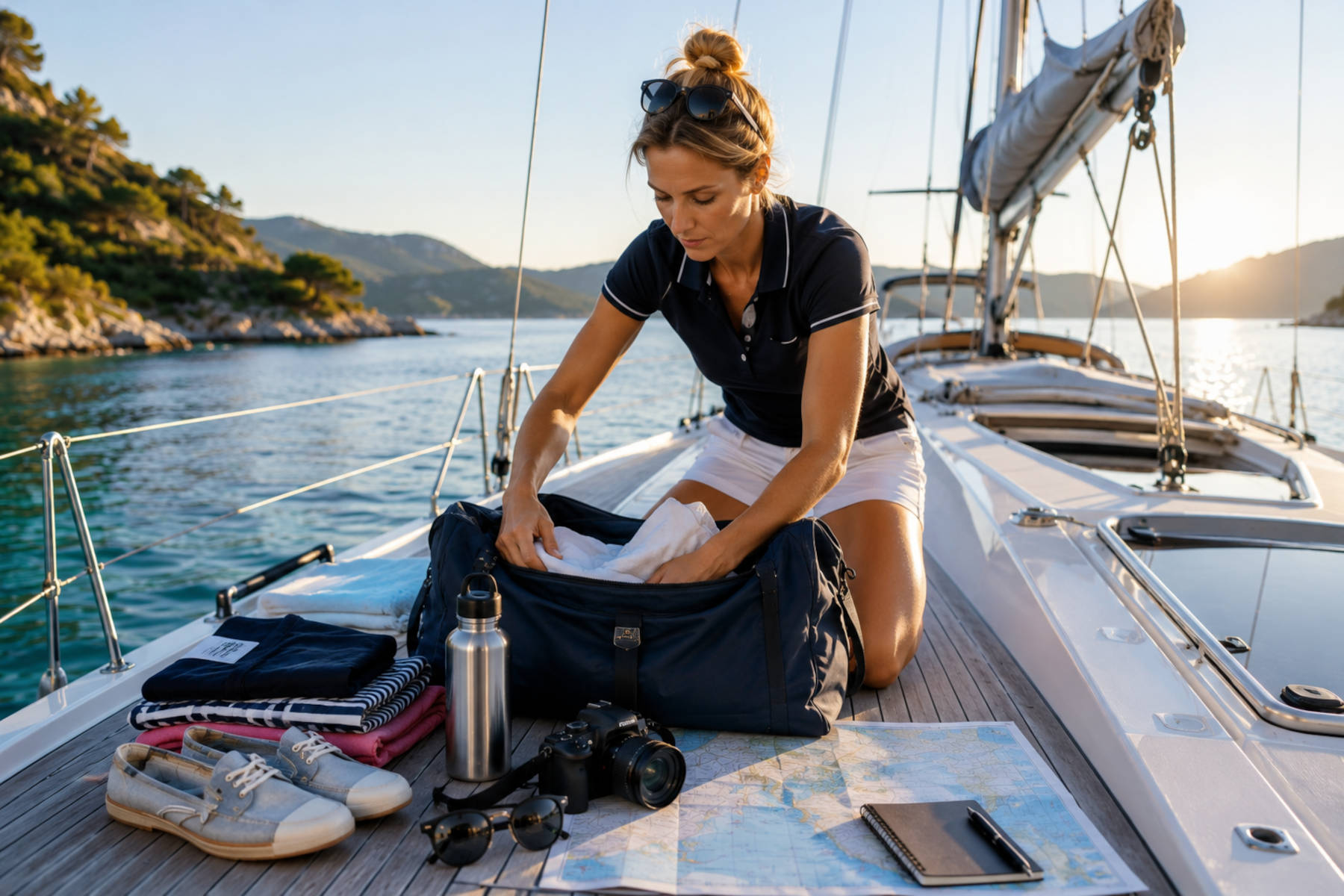
A first sailing trip is something most people remember for the rest of their lives. It is not simply another holiday by the sea, because life on a yacht follows completely different rules. The space is limited, your daily routine depends on the weather, and even ordinary things that seem unimportant on land can become surprisingly valuable once you are several miles from the shore.
Many people preparing for their first journey under sail face the same dilemma. They either pack as if they are moving to another country, bringing far more than they will ever use, or they arrive without a few simple things that would have made their time on board much more comfortable.
My name is Alexey Sukhoverkhov, and for the last eight years my yacht has been not only a place for travelling but also my home. During this time I have crossed many seas, visited different countries and welcomed numerous guests who were experiencing sailing for the first time. Watching beginners prepare for their first voyage taught me that the best equipment is usually not the most expensive one — it is simply the equipment that is useful in real life at sea.
This guide is based on my own experience as a sailor and captain. It is about the things that genuinely matter when you spend several days or a week on a yacht, and about the things that are better left behind.
1. Documents and money
Before choosing clothes or thinking about gadgets, the first thing to prepare is everything connected with documents and travel arrangements. A passport, necessary visas, travel insurance, booking confirmations and payment cards are the things that should always be kept somewhere safe and easy to reach.
Having digital copies of important documents is also a good habit. A photo stored on your phone or a copy saved in cloud storage takes almost no space, but it can become extremely useful if something unexpected happens during the journey.
On a yacht, however, the biggest enemy of documents is not bureaucracy but water. It may seem obvious, but after living at sea for years I have seen many situations where perfectly prepared travellers suddenly discovered that their expensive equipment, papers or clothes had spent some time underwater.
I remember one particular case from my own experience. While boarding a boat, I placed a heavy bag near the ladder for a moment. A few seconds later it slipped and disappeared into the water between the dock and the yacht. Inside were my documents, professional photography equipment and other valuable items.
Fortunately, we managed to recover the bag. I was lucky because everything important inside had been packed in waterproof bags. Without that simple precaution, the result would have been much more unpleasant and expensive.
Living on a yacht teaches you a practical lesson very quickly: the sea is always closer than you think, and anything left unprotected can eventually get wet.
2. Clothing for life on board
The first thing many beginners discover on a yacht is that they have brought too many clothes. Sailing is not a hotel holiday where you need a new outfit every evening. Most of the time, especially during summer trips in the Mediterranean, people spend their days in simple and comfortable clothes: shorts, a T-shirt, swimwear and something light for cooler evenings.
The sailing industry sometimes creates a different impression. Walk into a specialised shop and you will find impressive jackets, professional sailing suits and expensive equipment designed for extreme conditions. All of this has its place, especially for professional sailors or offshore passages, but a relaxed sailing holiday usually requires something much simpler.
Among experienced sailors there is even a small joke that the people who buy the most sailing equipment are often those who have spent the least time on a yacht. The reality of everyday sailing is usually much less glamorous and much more practical. Comfort, quick drying, protection from wind and the ability to move freely are far more important than a fashionable sailing wardrobe.
The best approach is to think in layers. A light fleece, a comfortable pair of trousers and a good windproof jacket can be much more useful than one heavy piece of clothing. Weather conditions at sea can change quickly, and several simple layers allow you to adjust without carrying unnecessary weight.
3. Footwear: practical matters more than appearance
Footwear is one of the few things on a yacht where there are very clear rules. Unlike on land, shoes are not only a matter of comfort or style — they can affect the condition of the boat itself. Many yachts have carefully maintained decks, and the wrong type of footwear can easily leave marks or even cause damage.
High heels, hard soles and dark rubber shoes are usually not welcome on board. Teak decks, which are still used on many yachts, require regular maintenance and can be damaged by unsuitable shoes. Modern synthetic decks are also not designed to withstand sharp objects or heavy footwear.
The ideal choice is a pair of comfortable sailing shoes with a soft, non-marking sole. However, if you are joining your first sailing trip and do not plan to become a professional sailor, there is no need to immediately buy expensive equipment. A clean pair of light-coloured sports shoes with a soft sole is often perfectly suitable.
Some people prefer to walk barefoot on board, and there is nothing unusual about that. Many sailors do exactly the same. However, a yacht deck is a working area rather than a beach, and there are ropes, fittings and metal parts everywhere. A careless step can easily result in an injured toe, especially when the boat is moving.
It is also important to remember that a sailing trip is not limited to the yacht itself. Most journeys include stops in small towns, walks through villages, visits to beaches and exploring islands. A good pair of comfortable shoes for going ashore will probably be used just as often as your sailing footwear.
4. Protection from the sun
The sun at sea is much stronger than many first-time sailors expect. The wind creates a pleasant feeling of freshness, and because you do not always feel the heat, it is easy to spend several hours outside without realising how much sunlight your skin has received.
A serious sunburn during the first days of a sailing trip can completely change the experience. Instead of enjoying the sea and exploring new places, you end up looking for shade and trying to recover. This is especially common among people who come from colder climates and are not used to spending so much time outdoors.
A good sunscreen, sunglasses if you normally use them, and a light shirt with long sleeves are usually enough to protect yourself. A simple cotton or linen shirt can sometimes be more useful than constantly applying more and more sunscreen, especially during long passages under the open sky.
There is a lot of marketing around sailing accessories, and everyone has their own opinion about caps, special glasses and other equipment. Some sailors never leave the cockpit without them, while others feel completely comfortable without additional gear. The important thing is not the equipment itself, but understanding that the sun at sea deserves respect.
5. Electronics and gadgets
Most people today travel with at least a smartphone, and on a sailing trip it becomes even more useful than usual. It is a camera, a navigation tool, a weather forecast device and a way to stay connected with the outside world. However, life on a yacht has its own limitations when it comes to electricity.
When a yacht is connected to shore power in a marina, charging devices is usually easy. The situation changes during sailing passages. The boat runs on its own batteries, and electricity becomes a resource that needs to be managed carefully, especially on longer trips.
This is why a power bank and suitable charging cables are useful things to have. Many yachts have charging points, but when several people are travelling together, everyone suddenly needs to charge their phone at the same time. A little preparation can prevent unnecessary arguments over the only available socket.
A waterproof phone case is also a practical addition. It does not mean you are expecting to drop your phone overboard, but life on a yacht involves wet hands, sea spray and occasional unexpected waves. Electronics and salt water have never been good friends.
At the same time, it is worth remembering why you came sailing. A yacht is probably one of the worst places to spend an entire day looking at a screen. The most memorable moments usually happen when the phone is put away: watching dolphins near the bow, approaching a new island, or sitting quietly in the cockpit while the sun goes down.
6. Personal items and everyday comfort
Living on a yacht teaches you to appreciate simplicity. The space available for personal belongings is limited, and after a few days everyone understands that having fewer things often means having more comfort.
Your personal hygiene items should be practical and compact. A small toiletry bag with the things you actually use is much better than bringing a complete bathroom cabinet from home. It is especially convenient when you need to use showers in marinas during stops.
Fresh water is one of the most important resources on any yacht. Modern boats are designed to provide comfortable living conditions, but the supply of water is not unlimited. When several people are travelling together, everyone quickly becomes aware that a long shower is not always the best idea.
Another small but important detail is the type of bag you bring. Large hard suitcases are perfect for airports and hotels, but they are inconvenient on yachts. A soft travel bag or backpack can be folded away and stored much more easily, leaving valuable space free for everyone on board.
After a few sailing trips, most people come to the same conclusion: the less unnecessary luggage you have, the more enjoyable life on the yacht becomes.
7. Medicine and personal health
Every yacht should have a basic first-aid kit on board, and modern boats are equipped with communication systems that allow the crew to call for professional help if necessary. However, this does not mean that you should rely entirely on what you find on the boat.
Your personal medication is something you should always bring with you. If you regularly take certain medicines, it is important to prepare everything before the trip begins. Finding a pharmacy in an unfamiliar port or a small island is not always as easy as it looks on a map, and in many countries some medications cannot be purchased without a prescription.
It is also sensible to have some basic supplies for common situations: small cuts, headaches, allergies, insect bites or sunburn. These are not serious problems, but when you are far from shore even a minor inconvenience can become much more complicated than it would be at home.
Motion sickness deserves special attention. Many experienced sailors know exactly how their body reacts to the sea, but even people who normally feel perfectly well on boats can have difficulties during their first longer passage. Taking appropriate medication with you does not mean that you expect a bad experience — it simply means that you are prepared.
Sailing is one of the safest forms of adventure tourism when organised properly, but it is still important to choose a route and a type of trip that matches your physical condition and personal circumstances.
8. Small things that make a sailing trip more comfortable
There is a special rhythm to life on a yacht. Some moments are full of activity: preparing the boat, changing sails, entering a harbour or exploring a new coastline. Other moments are wonderfully slow — hours of sailing with nothing around except the sea, the wind and the horizon.
During these quieter periods, small personal items can make a difference. A good reusable water bottle is almost essential. A small backpack is useful when going ashore. A book, cards or a simple game can be pleasant companions during evenings at anchor.
Many people also bring equipment for swimming and exploring underwater life. A mask and snorkel can turn an ordinary stop in a quiet bay into one of the highlights of the entire journey. At the same time, there is no need to carry everything yourself — many organised sailing trips already provide such equipment.
One thing that surprises many newcomers is that activities that seem perfect in theory do not always work in practice. Reading a book while sailing sounds romantic, but when the boat is moving and the waves are changing, many people quickly discover that looking at the horizon is much more comfortable than looking at a page.
The best entertainment on a yacht is often something that does not require any equipment at all: a conversation with other travellers, watching the changing colours of the sea, or simply enjoying the feeling of being far away from everyday life.
9. What you should leave at home
Knowing what not to bring is just as important as knowing what to pack. The limited space on a yacht naturally forces people to rethink their habits, and many experienced sailors eventually become much more minimalist when travelling.
The first thing to avoid is a large hard suitcase. It may be convenient at an airport, but on a yacht it quickly becomes an awkward object that takes up valuable space. A soft bag that can be folded and stored under a bunk or inside a locker is a much better solution.
You also do not need several weeks’ worth of clothes for a short sailing trip. Expensive jewellery, large amounts of cosmetics, heavy books and things brought only because they might possibly be useful usually spend the entire journey untouched.
I made exactly the same mistake when I started sailing. During my first trips, I prepared for every possible situation and carried many things that seemed important on land. After some experience, I realised that most of them were simply unnecessary weight.
Today, if I was invited to join a yacht delivery or a short sailing adventure, I would be perfectly comfortable travelling with one light bag. Life at sea has a way of showing you what is truly important and what is just extra baggage.
10. The most important thing: the right people and the right attitude
The equipment you bring on board matters, but it is not what makes a sailing trip memorable. The real atmosphere of a journey comes from the people who share it with you. A yacht brings strangers together in a small space, and the experience can become either unforgettable or difficult depending on the company.
Sailing is not a five-star hotel floating on the water. There may be strong winds, changing weather, unexpected delays or moments when everyone needs to help with the boat. But these small challenges are often exactly what later become the stories people remember and tell for years.
The best sailing trips are usually the ones where people are curious, open-minded and ready to participate. Sitting together in the cockpit after sunset, discussing the day, watching the stars or sharing stories from different parts of the world is often more valuable than any luxury service a traditional holiday can offer.
Many friendships that begin during sailing trips continue long after the journey ends. A week spent together at sea creates a unique connection because people experience something unusual together — something far away from normal everyday life.
So bring comfortable clothes, practical equipment and an open mind. Leave unnecessary worries on the shore, respect the sea, and enjoy the adventure. The most important thing you can take with you is curiosity and a willingness to become part of the journey.
Fair winds and happy sailing.