

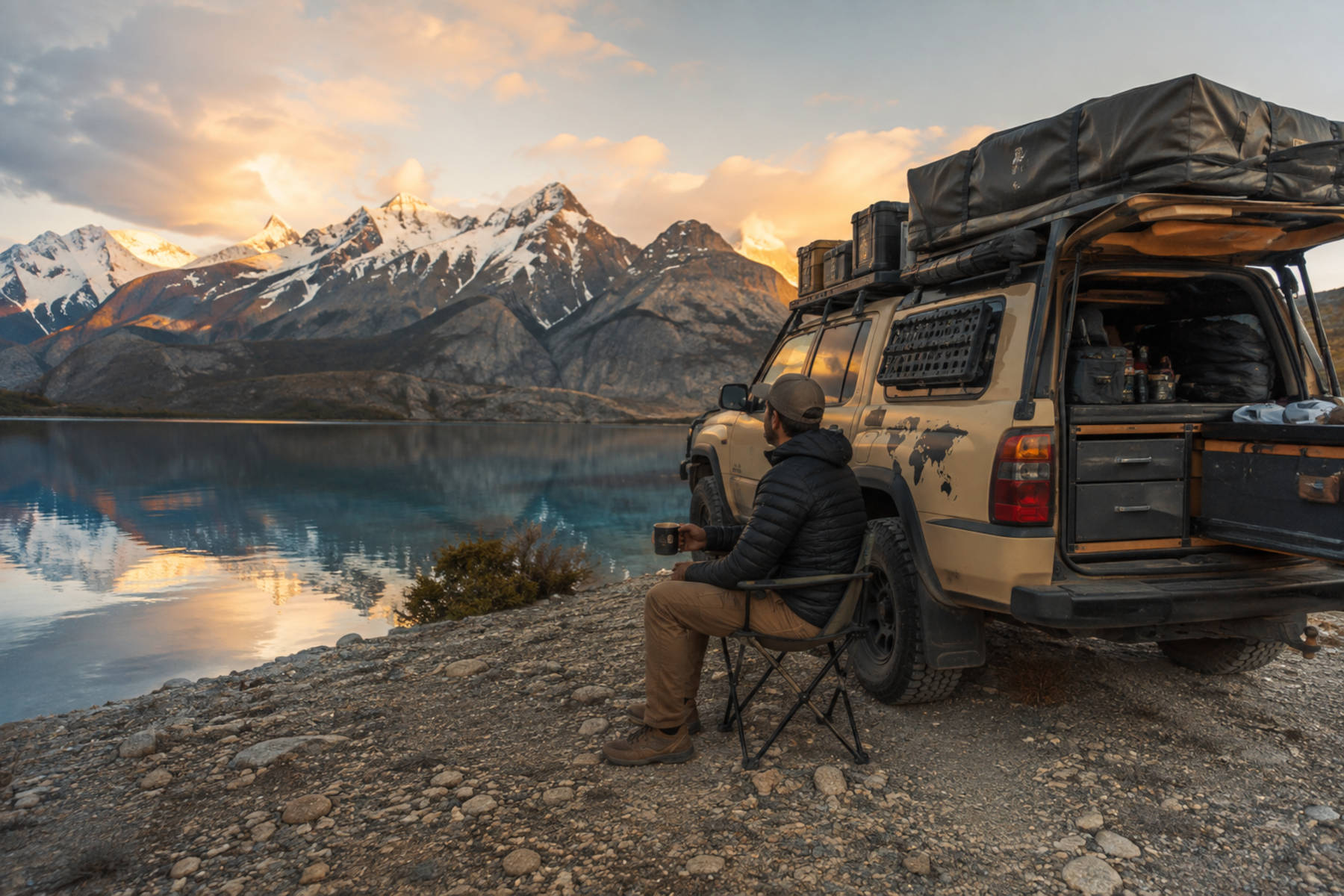
 There is a particular freedom in travelling overland that is difficult to find in other forms of adventure travel. Instead of moving from one hotel to another or following a fixed itinerary, you carry much of your own infrastructure with you and decide where the road takes you next. A dirt track can lead to a remote campsite, a mountain pass can replace a motorway, and a simple map can suddenly become more useful than a carefully planned schedule. But that freedom comes with a practical condition: when you are far from the nearest shop, petrol station or town, you need to have thought ahead.
An overland adventure can mean very different things to different people. It might be a long 4×4 journey through Morocco, a desert crossing in Namibia, a road trip across the American Southwest, several weeks travelling through the Canadian wilderness or a self-supported expedition where the vehicle becomes your transport, kitchen, storage room and sometimes your bedroom. The further you travel from ordinary infrastructure, the more important it becomes to carry the things that allow you to deal with unexpected weather, mechanical problems, limited water supplies and changes to your plans.
That does not mean filling your vehicle with every piece of expedition equipment you can find. In fact, one of the most useful lessons of overland travel is learning how to distinguish between genuine necessities and things that simply look useful in a catalogue. Weight, space and reliability all matter when your vehicle has to carry everything for several days or weeks. A complicated piece of equipment that you do not know how to use may be considerably less valuable than a simple tool you understand and have already tested.
This guide is therefore less about creating the biggest possible pile of gear and more about preparing intelligently. We will look at clothing, food and water, navigation, communication, recovery equipment, tools, power, camping equipment and the small things that become surprisingly important once you are far from civilization. The exact requirements will always depend on the vehicle, destination, season and level of remoteness, but the basic principle remains the same: the better prepared you are, the more freedom you have to enjoy the journey.
1. Start With the Route, Not the Equipment
The first thing to decide is not what you are going to buy, but where you are actually going. Overland travel is such a broad category that there is no universal packing list that makes sense everywhere. A two-week journey between established campsites requires very different preparation from a remote desert crossing where you may not see another vehicle for several days. Even the same route can require completely different equipment depending on the season and the condition of the roads.
Study the distances between fuel stations, towns and reliable water sources before you leave. Look at the terrain and find out whether you will be travelling on maintained gravel roads, sand, mud, rocky tracks or a mixture of everything. Seasonal conditions matter just as much: a route that is straightforward during a dry season can become extremely difficult after heavy rain, while a desert journey that is comfortable in one month can become punishingly hot a few weeks later. Local information is often more valuable than a generic guide written for an entire country.
You should also decide how independent you intend to be. If you are travelling from campsite to campsite and can reach a town every day or two, your vehicle does not need to carry the same reserves as one intended to operate independently for a week. The more remote the journey, the more carefully you need to think about fuel, water, food, communications and the possibility of mechanical trouble. Overland preparation is essentially an exercise in answering one question: what happens if the next planned stop is suddenly unavailable?
Finally, be honest about your driving experience. A heavily loaded 4×4 behaves differently from an ordinary car, particularly on steep tracks, sand or mud. If you are planning a serious off-road journey, learn the vehicle before you leave and understand its recovery points, tire pressures, four-wheel-drive system and basic limitations. The best expedition equipment in the world cannot compensate for a driver who does not know what the vehicle is capable of doing.
2. Water Is the First Real Priority
On an ordinary road trip, running out of water is an inconvenience because another shop is usually somewhere nearby. On an overland journey, the same mistake can become a serious problem very quickly. Water is needed not only for drinking but also for cooking, washing, cleaning equipment and dealing with unexpected delays. The amount you need depends on the climate, the number of people travelling and the availability of reliable sources along the route, so this is one area where careful planning matters far more than guesswork.
Carry drinking water in containers that are robust, secure and easy to organize inside the vehicle. It is usually better to have several containers than to depend on one enormous tank, because separate reserves make it easier to manage your supply and provide some redundancy if a container leaks or becomes contaminated. Keep some emergency drinking water separate from your everyday supply and make sure everyone travelling with you knows where it is. That reserve should exist for the day when your carefully calculated schedule stops working.
If your route involves collecting water from natural sources, understand exactly how you will make it safe before relying on that option. Filtration, purification and boiling each have their uses, but they are not interchangeable solutions for every situation. The equipment should be tested before the trip, not unpacked for the first time beside an unfamiliar river when everyone is already thirsty. In remote travel, redundancy is useful: having a primary method and a backup method is much more reassuring than having one clever piece of equipment that fails at the worst possible moment.
Water also needs protection from the environment. Containers should be kept securely inside or on the vehicle, protected from unnecessary heat and positioned so that they cannot become damaged on rough tracks. On a long journey, it is surprisingly easy to lose track of how much water remains if several people are helping themselves throughout the day. A simple system for monitoring your reserves can therefore be just as important as the containers themselves.
3. Food Should Be Simple, Reliable and Flexible
Overland travel is not the time to build a complicated menu that requires a supermarket every evening. The best expedition food is usually something that stores well, can be prepared with limited equipment and remains useful when the itinerary changes. Dry staples, canned or preserved foods, rice, pasta, cereals, bread, snacks and other familiar products can form the foundation, while fresh food can be added whenever you know you will have the opportunity to replace it. The less dependent your meals are on refrigeration and specialized ingredients, the more flexible your journey becomes.
Think in terms of days rather than individual meals. If a road is closed or a vehicle develops a problem, you may suddenly spend an extra night in a place where you had not planned to camp. Having enough food for the expected journey is therefore not the same as having enough food for the journey you may actually experience. A sensible reserve does not have to be enormous, but it should give you breathing room when plans change.
Your cooking equipment should follow the same principle of simplicity. A reliable stove, fuel appropriate for the system, a compact set of cookware, basic utensils and a method for preparing coffee or tea will usually be more useful than a miniature outdoor kitchen. If you are travelling with several people, agree in advance who is responsible for cooking and cleaning so that the same equipment is not constantly being unpacked and repacked. Overland travel already involves enough organization without turning every dinner into a logistical operation.
Do not forget about rubbish. When you are travelling through remote landscapes, everything you bring in needs to be managed responsibly, and that includes food packaging, cans and other waste. Strong rubbish bags take almost no space and can be used to keep the vehicle clean as well as to store waste until you reach a suitable disposal point. Leaving a beautiful campsite with nothing behind except tire tracks is one of the simplest ways to show respect for the places that make overland travel worthwhile.
4. Recovery Gear Can Save the Trip
One of the biggest differences between an ordinary road trip and a serious overland journey is what happens when the vehicle stops moving. On a normal road, you call roadside assistance and wait for someone to arrive. In a remote area, there may be nobody coming, or the nearest help may be many hours away. That is why recovery equipment deserves a place in your planning, even if you hope never to use it.
The exact recovery kit depends on the vehicle and terrain, but a suitable recovery strap, rated shackles and a reliable recovery point are among the basics worth understanding. If you expect to drive through sand, mud or difficult tracks, equipment such as traction boards can also be extremely useful. A high-lift jack may have a place on some vehicles, but it is not automatically the right tool for every situation and can be dangerous when used incorrectly. Before carrying recovery equipment into the wilderness, learn how it works and understand the limits of both the vehicle and the equipment.
Tires deserve just as much attention as recovery gear. A puncture is annoying on a paved road, but it can become a serious problem when you are hundreds of kilometres from the nearest tire shop. Carry a suitable spare, make sure you know how to change it and bring the tools required to do so on the actual terrain where you will be travelling. A tire repair kit and a compressor can also be valuable additions, particularly when changing tire pressures is part of travelling over sand or rough surfaces.
The most important recovery tool, however, is often knowledge. Before heading into difficult terrain, learn how to reduce tire pressure appropriately, how to use your vehicle’s traction systems and how to choose a safe recovery point. Never assume that having a winch or recovery strap automatically makes a dangerous situation safe. Recovery operations can involve enormous forces, and improvised methods can cause serious injuries or vehicle damage.
5. Basic Tools and Spare Parts
You do not need to become a professional mechanic before setting off on an overland adventure, but you should know enough about your vehicle to deal with the problems that are reasonably likely to occur. Start with the manufacturer’s recommended tools and then think about the weaknesses of your particular vehicle. A basic toolkit, tire equipment, spare fuses, electrical supplies and a few appropriate spare parts can make the difference between a short roadside repair and a long wait for assistance.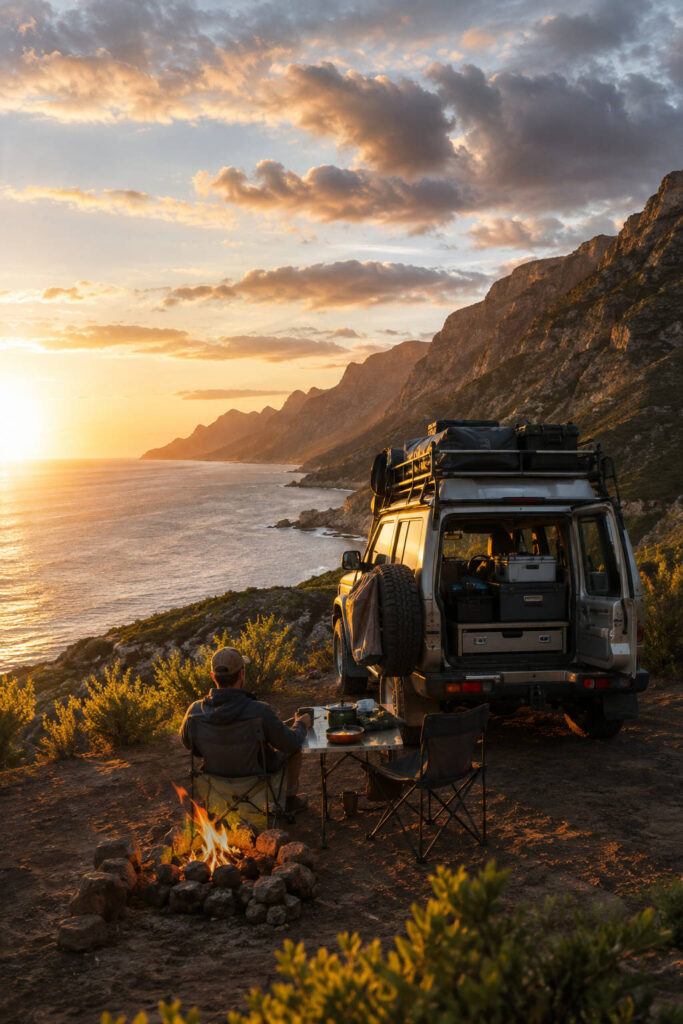
Belts, hoses, filters, bulbs, fuses and other small components can be worth carrying if they are known failure points for your vehicle or difficult to obtain along the route. The same applies to consumables that are specific to your vehicle and may not be available in remote regions. You do not need to carry half a garage, but you should think about which small failure could leave you stranded and whether there is a sensible way to prepare for it.
A multimeter, electrical tape, cable ties, spare wire and a selection of hand tools can be remarkably useful even when the problem is not obvious. Cable ties in particular have an almost legendary reputation among experienced travellers because they can temporarily secure a surprising number of things. That does not make them a permanent repair solution, of course, but a temporary fix can be enough to get you back to a place where a proper repair is possible.
Most importantly, practice before the trip. There is little value in carrying a sophisticated toolkit if you have never opened the bonnet and do not know what you are looking at. Watch the relevant maintenance procedures, read your vehicle’s manual and, if possible, learn basic repairs from someone with experience. Overland travel rewards people who prepare for realistic problems rather than people who simply own a lot of equipment.
6. Navigation When the Road Stops Looking Like a Road
Navigation is one of the areas where modern technology has transformed overland travel, but electronic maps should not be your only source of information. A smartphone or dedicated GPS device can be extremely useful, particularly when maps are available offline, but batteries fail, devices break and coverage disappears. In remote country, knowing where you are and where you are going should not depend entirely on a single screen.
Download your maps before leaving reliable internet access and make sure you understand how the navigation system works offline. It is also useful to carry more than one source of geographical information, particularly when travelling through large areas with few roads or tracks. A paper map and compass may seem old-fashioned, but they provide a valuable backup when electronics stop cooperating. You do not need to become an expert navigator, but you should know how to establish your position and direction without relying completely on a mobile network.
Pay particular attention to fuel planning. On a long overland route, the distance between fuel stations may be much greater than you are accustomed to, and detours can consume considerably more fuel than expected. Carrying an appropriate reserve can provide valuable flexibility, but fuel should always be transported in approved containers and stored safely according to local regulations. Before leaving, calculate your expected range under realistic conditions rather than relying on the optimistic figure printed in a vehicle brochure.
Navigation is ultimately about more than finding the fastest route. It is about understanding the terrain and making sensible decisions before you reach a difficult section. If a track is flooded, damaged or clearly beyond the capabilities of your vehicle, the correct response may be to turn around rather than follow the line on the screen simply because it says that this is the way forward. A navigation device can tell you where the road is supposed to be; it cannot tell you whether driving it today is a good idea.
7. Power, Communication and Staying Connected
Modern overland vehicles can carry an impressive amount of electrical equipment. Phones, cameras, GPS devices, refrigerators, lights and laptops may all need power, while some vehicles also use auxiliary batteries or solar panels to support longer journeys. The key is to decide what you actually need before building an elaborate electrical system. Every additional device creates another battery to charge, another cable to organize and another potential point of failure.
For a short trip, a couple of reliable power banks and vehicle charging may be enough. Longer expeditions may justify an auxiliary battery, inverter or solar setup, particularly if you need to keep a refrigerator running for several days. Whatever system you choose, understand how much power it can produce and how much your equipment consumes. There is little point installing a large collection of electronics if the system cannot keep them running when the vehicle is stationary.
Communication becomes increasingly important as you move farther away from populated areas. A mobile phone is useful where there is coverage, but remote regions may have long stretches without any signal at all. Depending on the destination and level of remoteness, travellers may consider satellite communication or other dedicated emergency devices. The right choice depends heavily on the country, route and local regulations, so this is one area where destination-specific advice is particularly important.
Whatever communication system you carry, make sure everyone in the vehicle knows how to use it. Emergency equipment is not particularly useful if the person holding it has never switched it on. Keep important emergency numbers, route information and relevant contact details available offline as well. When you are far from civilization, communication is not about staying constantly connected to the internet; it is about having a reliable way to reach the right person when something genuinely goes wrong.
“`html
8. Camping Equipment: Keep It Comfortable, Not Complicated
If your overland adventure includes sleeping away from established campsites, your vehicle effectively becomes the centre of a small mobile camp. The equipment you need depends on whether you are sleeping inside the vehicle, using a rooftop tent or pitching a conventional tent beside it. None of these approaches is automatically better than the others, but each changes how much space, time and equipment you need to carry. Choose the system that suits the journey rather than building the vehicle around an imagined expedition.
A good sleeping bag or suitable bedding is obviously important, but temperature ratings should be considered carefully. Desert nights can be surprisingly cold after a brutally hot day, while high-altitude destinations can become genuinely freezing even during seasons that feel warm elsewhere. A sleeping mat or mattress is just as important as insulation because the ground can remove body heat quickly and an uncomfortable night will affect everything you do the following day. Test your sleeping system before the trip rather than discovering its weaknesses at midnight in the middle of nowhere.
Lighting is another small detail that becomes disproportionately important after sunset. A headlamp is generally more useful than relying entirely on a vehicle’s interior lights because it leaves both hands free when you are cooking, setting up camp or dealing with equipment. Keep spare batteries or a reliable rechargeable option available, and consider a separate lantern for the living area if you are travelling with several people. Good lighting also helps you avoid leaving small pieces of equipment scattered around a campsite where they can disappear into the darkness.
Camp furniture is a matter of personal preference, but it is easy to carry far more than you need. A compact chair and a simple table can make long evenings much more comfortable, while elaborate camping furniture can quickly consume valuable storage space. The same principle applies to showers, awnings and other comforts: if the equipment makes the trip genuinely better and you have room for it, bring it, but do not assume that every popular accessory belongs on every overland vehicle. The best setup is the one you can unpack, use and put away without turning camp into a construction project.
9. Clothing for More Than One Environment
Overland journeys often cross several climates, sometimes within the same day. A route may begin in a hot valley, climb into cold mountains and finish beside a windy coastline, or move between intense daytime heat and surprisingly cold nights. This makes layers far more useful than a collection of heavy specialist garments. Lightweight base layers, a warm insulating layer and a waterproof or windproof outer layer can cover a remarkable range of conditions without filling the entire vehicle.
Footwear deserves similar consideration. You may spend part of the day driving, another part walking around camp and several hours exploring trails or rough terrain. One pair of comfortable, durable shoes may be enough for an easy journey, while a more demanding route could justify adding sturdy hiking footwear. Whatever you choose, make sure it has already been worn and tested before departure. Blisters are irritating on a normal holiday and thoroughly miserable when the nearest pharmacy is several hundred kilometres away.
Sun protection should be treated as everyday equipment rather than something you remember only for particularly hot destinations. Sunglasses, sunscreen, a hat and lightweight clothing that covers exposed skin can make a major difference during long days outside the vehicle. In dry or dusty environments, a scarf or buff can also be useful for protecting your face and neck. At the same time, insect protection may become more important around wetlands, rivers and tropical areas, so your clothing and repellent should reflect the environments on your actual route.
Do not pack a different outfit for every day. Overland travel is one of those situations where practical clothing quickly becomes more valuable than fashionable clothing, and many experienced travellers deliberately keep their wardrobes small. Choose fabrics that dry reasonably quickly, can be washed easily and can be combined in several ways. A few reliable layers will usually serve you better than a vehicle full of clothes that you rarely wear.
10. Documents, Emergency Information and the Final Check
There is one category of equipment that weighs almost nothing but can stop an overland journey before it begins: documents. Depending on the countries you are visiting, you may need passports, visas, vehicle registration documents, insurance papers, driving licences, permits, border paperwork and proof of ownership or authorization to use the vehicle. Requirements vary enormously between destinations, so this is an area where current official information should always take priority over assumptions based on previous trips.
Keep important documents protected from water and make both physical and digital copies where appropriate. Digital copies can be stored securely on a phone or other device, while printed copies remain useful when batteries are dead or internet access is unavailable. It is also sensible to keep emergency contact details, insurance information and relevant vehicle information accessible without an internet connection. Organization matters because searching through dozens of photographs and emails while standing at a remote border crossing is not an enjoyable way to start the morning.
A basic first-aid kit should reflect the environment and the remoteness of the journey rather than simply being a small box purchased at the supermarket. Dressings, antiseptic supplies, blister treatment, gloves and other basic items can deal with many minor problems, while any personal medication should be carried in sufficient quantities for the entire trip. If you are travelling somewhere particularly remote, discuss destination-specific medical preparation with a qualified healthcare professional before departure. A first-aid kit is useful, but it is not a substitute for knowing when a problem requires professional help.
Before you finally leave, walk around the vehicle and check everything rather than trusting your memory. Check tires, fluids, lights, recovery equipment, fuel, water, cooking supplies and the condition of anything mounted outside the vehicle. Make sure heavy objects are secured so they cannot become dangerous projectiles on rough tracks, and confirm that everyone knows where the essential equipment is stored. A final hour spent checking the vehicle may feel unnecessary when you are eager to start driving, but it is considerably more pleasant than discovering an avoidable problem several hundred kilometres from the nearest road service.
Overland Travel Is About Preparation, Not Possession
The most impressive overland vehicle is not necessarily the one carrying the most equipment. A journey through remote country is ultimately about making sensible decisions with limited resources, understanding your surroundings and being prepared for the problems that are genuinely likely to occur. A well-maintained vehicle, enough water and fuel, reliable navigation, basic recovery equipment and a sensible communication plan will usually matter far more than a collection of expensive accessories.
At the same time, preparation should never become an excuse to remove all spontaneity from the journey. Leave some room in your plans for the unexpected turn, the unmarked campsite, the conversation with another traveller or the road that looks far more interesting than the one you originally intended to follow. Carry enough supplies to remain independent, but do not turn the vehicle into a warehouse. The freedom of overland travel comes partly from knowing that you have enough to cope when the plan changes.
Before every major journey, ask yourself a few simple questions: How far can I travel before I need fuel? How much water do I have? What happens if the vehicle gets stuck? What happens if I get a puncture? How will I navigate without mobile coverage? How will I contact someone if there is an emergency? If you can answer those questions confidently and have tested the equipment involved, you are probably much better prepared than someone carrying twice as much gear without knowing how to use it.
That is really what good overland packing is about. You are not trying to take everything you might possibly need; you are building a small, reliable system that allows you to travel farther from everyday infrastructure without becoming unnecessarily dependent on it. Once the vehicle is prepared, the food and water are secured, the recovery equipment is ready and the essential documents are in order, there is only one thing left to do: start the engine and see where the road leads.
I’ve done a couple of long 4×4 trips across the Southwest, and the water section is absolutely right. On my first trip I treated water like something I could just pick up whenever we needed it. Big mistake. Once you’re away from towns, you start looking at every litre differently. We now keep a separate emergency reserve that nobody touches unless there’s actually a problem.
The part about learning your vehicle before the trip is so important. I see people spending thousands on recovery gear but then they don’t know how to use the winch, where the recovery points are, or how much they can safely carry. A simple tool you actually understand is worth much more than a garage full of equipment you’ve never tested.
I really liked the advice about packing fewer clothes. We spent two weeks travelling through Morocco and I definitely packed too much. After a few days everything was dusty anyway, so nobody cared what they were wearing 😂. Layers and clothes that dry quickly are much more useful than trying to have a fresh outfit for every day.
Paper maps are definitely not dead. We had no phone signal for a big part of one South Island trip and our GPS decided to behave strangely at exactly the wrong moment. Having a proper map in the glovebox was suddenly the most useful thing in the vehicle. I’d also add: download everything offline before you leave.
The final vehicle check is something I learned the hard way. We once started a trip with a tiny issue that seemed too insignificant to worry about. A few hours later it had become a much bigger problem because we were nowhere near a proper workshop. Now I check tires, fluids, recovery gear and everything mounted on the vehicle before every serious trip, even if I think I already know everything is fine.
My favorite line here is basically “don’t build a warehouse on wheels.” That’s exactly what happened to me 😂. I kept adding chairs, gadgets, cooking stuff, spare this and spare that until there was barely room to move inside the truck. These days I try to ask one question before bringing something: have I actually used this before, and do I know how to fix it if it breaks?