

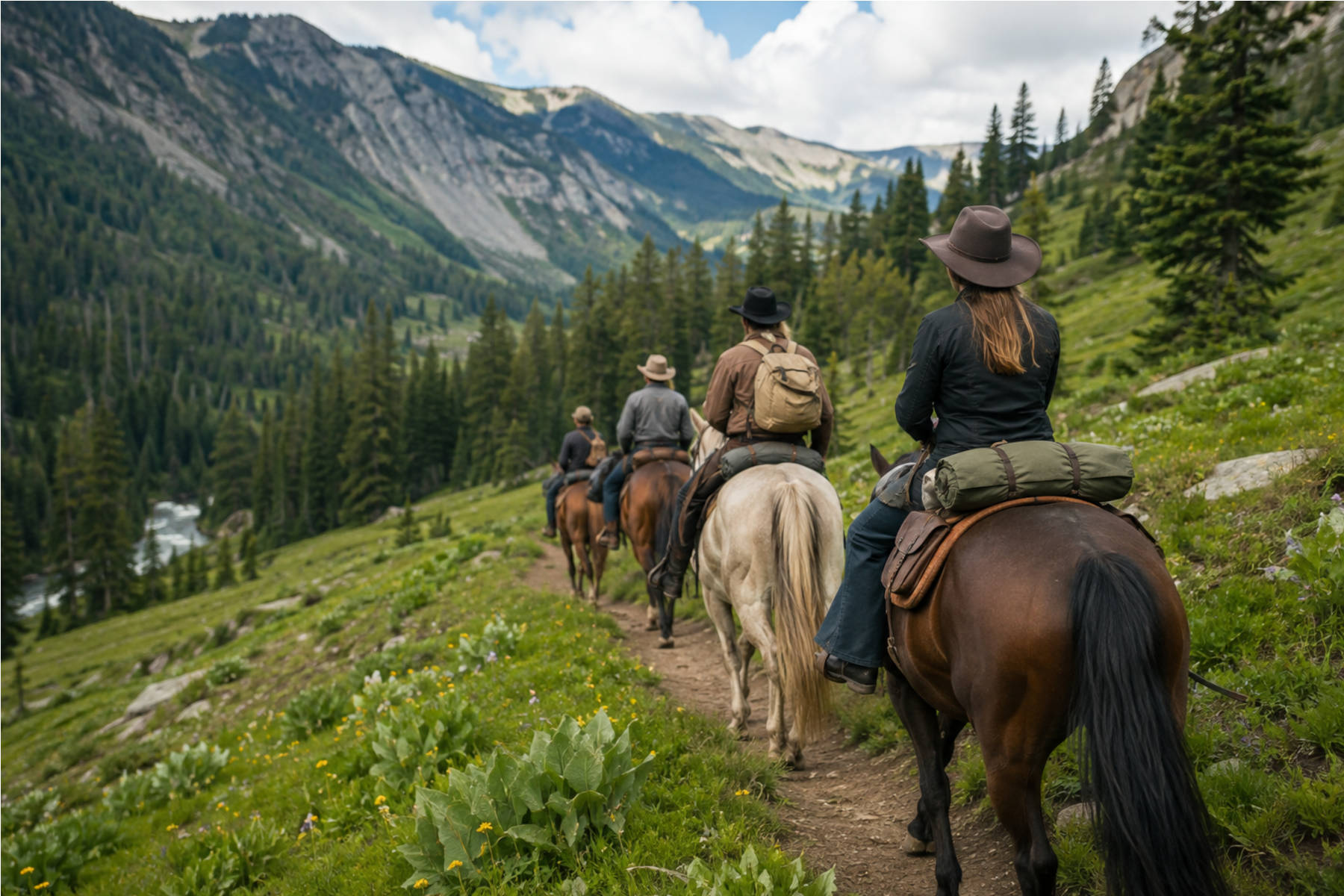
 There is something wonderfully old-fashioned about traveling on horseback. For a few hours, or perhaps several days, the usual distance between traveler and landscape disappears, and the rhythm of the journey is determined by the horse beneath you rather than by an engine, a timetable or a paved road. A trail that might take little notice of a passing car suddenly becomes an experience in itself, with changing terrain, weather and scenery unfolding at the pace of the animal. It is easy to understand why horseback riding remains such an appealing way to explore places that would otherwise be difficult to reach.
It is also easy for a first-time rider to pack for the wrong kind of adventure. Someone who has spent years hiking may assume that hiking clothes and boots are automatically suitable for a day in the saddle, while a traveler accustomed to ordinary holidays may bring far too many things that have little practical value on a horse. After several hours of riding, small details that seemed unimportant at home can suddenly become very noticeable. Clothing that rubs, shoes that do not fit properly in the stirrups or a backpack that moves around with every step can turn an enjoyable ride into an uncomfortable one.
The good news is that you do not need a huge collection of specialized equipment to enjoy a horseback riding trip. For most recreational rides, the stable or outfitter will provide the horse, saddle and basic riding equipment, while your responsibility is mainly to arrive with suitable clothing, footwear and a few personal essentials. Longer journeys require more thought, particularly when the route takes you away from roads and accommodation, but even then the best packing strategy is usually based on practicality rather than quantity.
This guide is aimed primarily at recreational riders and people preparing for their first longer horseback riding adventure. It is not intended to replace instructions from an experienced riding guide, stable or expedition operator, particularly when the route involves difficult terrain or overnight travel. The most important thing is to understand what kind of ride you are joining, what equipment will be supplied and what conditions you are likely to encounter before deciding what deserves a place in your bag.
1. Understand the Ride Before You Start Packing
The first question to ask is not what clothes you should bring, but what kind of horseback riding trip you are actually taking. A two-hour trail ride through a forest is a completely different experience from a full-day mountain ride or a week-long expedition where you travel and camp with the horses. The terrain, weather, distance and level of riding experience all affect what you will need. Even the type of horse and riding style can make a difference, so it is worth asking the organizer for practical advice before you begin packing.
Experienced outfitters are usually happy to explain what they provide and what riders should bring themselves. They may supply helmets, saddles, stirrups and other essential riding equipment, while asking guests to arrive with suitable trousers, closed footwear and weather protection. Some operators may have very specific requirements depending on the horses, terrain or local conditions. Following those instructions is far more useful than buying specialist equipment simply because it appears in photographs of professional riders.
The length and remoteness of the trip are particularly important. On a short organized ride, you can normally leave most of your belongings safely at the starting point and take only what you need for the time you are in the saddle. A multi-day trip is different because clothing, personal items and camping equipment may have to travel with the group, either on pack animals, support vehicles or the horses themselves. Find out how luggage is transported before you arrive, because the amount you can comfortably bring may be very different from what you would normally take on a road trip.
It is also worth being honest about your own riding experience. If you are a beginner, there is little benefit in choosing equipment designed for advanced riders before you have discovered whether horseback riding is something you genuinely enjoy. A reputable guide will match the route and pace to the abilities of the group, and your job is to listen, ask questions and follow instructions. The most successful first riding experiences tend to be the ones where the rider spends more time enjoying the landscape than worrying about whether they brought the right brand of equipment.
2. Your Trousers Matter More Than Your Shirt
People who have never spent several hours in a saddle often underestimate how much difference the right trousers can make. Walking clothes are designed for a different kind of movement, while ordinary jeans can become surprisingly uncomfortable when you are sitting in the same position for a long time and moving continuously with the horse. The fabric needs to allow your legs to move freely while reducing friction in the places that are constantly in contact with the saddle. For a short ride this may seem like a minor detail, but after several hours it can become one of the most important pieces of clothing you brought with you.
Riding tights or purpose-made breeches are the obvious choice for people who ride regularly, but they are not essential for every beginner. Comfortable, close-fitting trousers made from a flexible fabric can work perfectly well for a recreational trail ride, provided they do not have bulky seams or material that bunches up under the legs. Loose trousers are generally less practical because excess fabric can catch on equipment or simply become irritating as the ride continues. The important thing is comfort, freedom of movement and the absence of anything likely to rub.
Shorts are another choice that often seems reasonable until you actually spend a few hours in the saddle. Even in warm weather, exposed skin can become uncomfortable from repeated contact with the saddle, stirrups and other equipment, while long grass, branches and insects can add another layer of irritation. Lightweight long trousers provide protection without necessarily making you feel overheated. In hot climates, breathable fabrics can make a substantial difference, particularly when the route involves long periods in direct sunlight.
Your upper layers are easier to manage because you can adjust them during the ride. A lightweight base layer combined with a breathable outer layer gives you more flexibility than one heavy garment, particularly when temperatures change between morning and afternoon. If rain is possible, a compact waterproof jacket should be easy to reach rather than buried at the bottom of a bag. On a long trail, being able to add or remove a layer without unpacking everything can make the difference between simply adapting to the weather and spending several hours wishing you had dressed differently.
3. Choose Footwear for the Stirrup, Not Just the Trail
Footwear is another area where hiking experience can create a false sense of confidence. A pair of excellent hiking boots may be perfect for walking through the mountains but not necessarily ideal for riding, because the shape of the sole and heel matters when your foot is positioned in a stirrup. Riding footwear is designed to provide a secure relationship between the foot and the stirrup while reducing the risk of the foot sliding too far through. For that reason, the recommendations of your riding guide should take priority over simply wearing whatever boots happen to be your most comfortable outdoor shoes.
For casual trail riding, footwear with a modest heel and a reasonably smooth sole is often more appropriate than a heavily lugged hiking boot. The exact requirements vary according to the stable and the equipment being used, so check before the trip rather than assuming that one universal rule applies everywhere. If you are riding regularly, proper riding boots or paddock boots may eventually be worth investing in, but there is little reason for a first-time rider to spend a large amount of money before knowing whether the activity suits them.
Comfort still matters, particularly when a riding trip includes time on foot. Some trail rides involve walking beside the horses, crossing uneven ground or spending time at campsites, so footwear that is practical away from the saddle can be useful as well. Whatever you choose, make sure it is already broken in and comfortable before the trip. A new pair of boots may look perfect in a shop, but a long day of riding is an exceptionally effective way to discover every small problem with the fit.
4. Protect Yourself From the Weather
Weather has a way of becoming more noticeable when you are sitting on a horse for several hours. On foot, you can usually adjust your pace, stop beneath a tree or take a short break whenever you need to, but a trail ride often continues according to the route, the horses and the group. Sun, wind and rain can therefore become much more tiring than they initially appear. The best approach is to prepare for changing conditions without turning your luggage into a collection of every garment you own.
Sun protection is particularly important because riders can spend most of the day in exposed terrain. A lightweight long-sleeved shirt, a suitable hat for use when you are not wearing a helmet and good sunscreen can make a long ride considerably more comfortable. Sunglasses are useful as well, particularly on open trails where dust, glare and reflected sunlight can become tiring after several hours. Choose things that fit securely and do not interfere with your helmet or riding equipment, because anything loose has a remarkable tendency to become a distraction once the horse is moving.
Rain requires a little more planning. A compact waterproof jacket can be extremely useful, but it should be something you can actually wear comfortably while riding rather than a bulky hiking shell that restricts your arms and shoulders. Waterproof trousers may also be worthwhile on a longer expedition, particularly if the forecast is uncertain and there is no easy way to return to shelter. The important thing is to keep rain protection accessible, because a waterproof jacket buried deep inside your luggage is not much use when the first shower arrives halfway along the trail.
Temperature can be just as unpredictable as rain, especially on mountain rides where conditions change with elevation. Early mornings may be surprisingly cold, while several hours of sunshine can make the same trail feel completely different by afternoon. Layers are therefore much more useful than one heavy jacket, allowing you to adjust your clothing without interrupting the ride. On a multi-day trip, keeping at least one completely dry warm layer reserved for the evening is an especially good idea, because there is little luxury in outdoor travel quite like putting on dry clothes after a long day outside.
5. Your Hands and Head Need Protection Too
Riding gloves are one of those small pieces of equipment that beginners often underestimate. The reins may not seem particularly demanding at first, but holding them for hours can create friction and pressure in places that are not accustomed to it. A comfortable pair of gloves can protect your hands while also improving your grip, particularly if the reins become damp from rain or sweat. They do not need to be expensive specialist equipment for an occasional rider, but they should fit properly and allow your fingers to move naturally.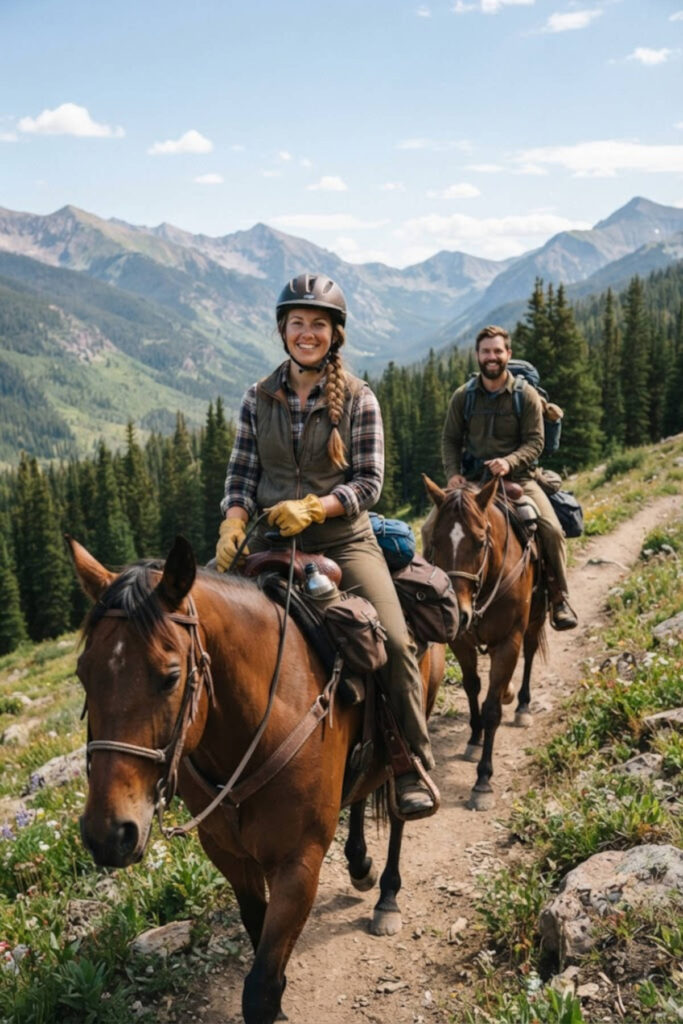
Your head is obviously a different matter, because a riding helmet is not simply another item of clothing. For organized rides, follow the stable’s requirements and wear an appropriate, properly fitted riding helmet whenever instructed, even if you have seen experienced riders choosing not to wear one. A helmet should fit securely without being painfully tight, and borrowing one from a reputable operator is generally preferable to arriving with a bicycle or climbing helmet that was designed for an entirely different activity. Safety equipment works best when it is designed for the situation in which you actually need it.
There are also small personal items that become useful once you spend a full day outdoors. Lip balm, sunscreen and insect repellent can all earn their place in a small accessible bag, particularly on summer rides through forests, grassland or wetlands. A compact water bottle is essential as well, although the exact amount you need depends on the duration of the ride, the climate and whether the guide provides water along the route. The important thing is to keep essential personal items secure and close enough to reach without creating a loose collection of objects that could interfere with the horse or equipment.
6. Water, Food and the Long Day in the Saddle
Horseback riding may look leisurely from a distance, but spending several hours in the saddle is genuine physical activity. Your legs, back and core are working continuously to maintain balance, while heat and sun can increase the amount of water you need. Dehydration can creep up on riders because the activity does not always feel as strenuous as running or hiking, particularly when the horse is doing most of the visible movement. Carrying enough drinking water and following the guide’s recommendations about hydration should therefore be considered part of basic preparation rather than an optional extra.
Food becomes more important as the ride gets longer. A short trail excursion may finish before you ever think about lunch, while a full-day or multi-day journey requires enough energy to keep you comfortable and attentive in the saddle. Simple snacks that can be carried securely and eaten during an appropriate break are usually more useful than anything elaborate, particularly when the route passes through remote countryside. Nuts, dried fruit, energy bars or a simple sandwich can all work well, depending on your preferences and the arrangements made by the riding operator.
On a longer expedition, food planning becomes part of the group’s logistics rather than something every rider handles independently. Find out whether meals are provided, whether pack horses carry supplies or whether riders are expected to bring their own food. The same applies to drinking water, because a remote trail may pass through natural water sources that are not automatically safe to drink from. Never assume that a clear mountain stream is suitable for drinking simply because it looks pristine; follow the instructions of the guide and use appropriate treatment when necessary.
There is also a practical reason not to overeat before riding. A large meal immediately before spending hours in the saddle can be uncomfortable, particularly for someone who is not accustomed to the movement of a horse. Smaller meals and snacks spaced through the day are often easier to manage, while regular hydration helps maintain concentration as well as physical energy. Once you have spent a full day riding, you quickly discover that a simple snack and a bottle of water at the right moment can be worth far more than a bag full of unnecessary equipment.
7. The Small First-Aid Kit That Earns Its Place
Most organized horseback riding trips are designed to be safe, and professional guides normally carry appropriate first-aid and emergency equipment for the route. That does not mean you should arrive without considering your own basic needs. A small personal first-aid kit can deal with the ordinary problems that make an otherwise enjoyable day uncomfortable, such as blisters, minor scratches, insect bites or small cuts. It should be compact enough to carry without becoming another burden, and anything you personally need on a regular basis should be packed separately and kept accessible.
Foot and skin care deserve particular attention because riding involves repeated friction and pressure. Even perfectly comfortable trousers and boots can produce irritation after several hours if the fit is not quite right, while a small blister can become surprisingly painful when you still have another twenty kilometers of trail ahead. A few basic supplies can prevent a minor problem from becoming the defining memory of the day. This is another reason to test your clothing and footwear before the trip rather than treating the first day in the saddle as an opportunity to break everything in.
On remote or multi-day rides, the group’s emergency arrangements become much more important. Ask the operator how medical emergencies are handled, how far the route travels from roads or settlements and what communication equipment the guides carry. You do not need to reproduce an expedition medical kit in your backpack, but you should know that the people responsible for the trip have a realistic plan for dealing with problems. Good preparation is reassuring precisely because it means you do not have to think about emergencies every minute of the journey.
8. What to Carry on a Multi-Day Horseback Adventure
A multi-day horseback journey changes the meaning of “packing light.” You are no longer preparing for an afternoon activity but for several days in which your clothing, personal belongings and outdoor equipment may have to travel with you through changing weather and often over rough terrain. Fortunately, riders are rarely expected to carry everything on their backs for the entire journey. Depending on the expedition, luggage may be transported on pack horses, support vehicles or by other means, so the first thing to establish is exactly how your belongings will move from one camp to the next.
Once that is clear, the same principle that applies to every good outdoor trip becomes important: take versatile things rather than many specialized ones. A pair of trousers that works comfortably in the saddle and around camp is more useful than several outfits designed for different situations, while a warm layer that can be worn in the evening is preferable to clothing that serves only one purpose. The weather should determine the amount of protection you need, but unnecessary duplicates quickly become dead weight when you are moving between camps every day.
Keeping things organized is just as important as deciding what to bring. A small dry bag for spare clothes, another for personal items and a separate place for anything you may need during the day can save a remarkable amount of frustration when the group stops for the evening. Waterproof protection is especially valuable because rain can find its way into luggage even when the bags appear well protected. There is little worse after a long day in the saddle than discovering that the only dry clothes you have left have become damp somewhere along the trail.
Camping equipment should normally be discussed with the operator before the trip rather than packed automatically. Some expeditions provide tents, sleeping bags, cooking equipment and meals, while others expect riders to bring particular items or share equipment among the group. The more remote the journey, the more important it becomes to understand these arrangements in advance. Good expedition organizers will normally provide a clear packing list, and following it is far more sensible than trying to design your own equipment system from photographs found online.
9. Leave the Wrong Things at Home
Horseback riding has a remarkably effective way of exposing unnecessary luggage. Anything that rattles, swings, catches on branches or needs constant adjustment will eventually become irritating, particularly when you are trying to concentrate on the horse and the trail. Large backpacks are often unnecessary and can interfere with riding equipment, while loose objects attached to clothing or saddlebags can create problems of their own. Before bringing something on a trail ride, it is worth asking whether you genuinely need it or whether you simply feel more comfortable having it nearby.
Fragile electronics are a good example. A phone can be extremely useful for communication, navigation and photography, but it should be protected and secured rather than carried loosely in a pocket where it can fall out during mounting or dismounting. Laptops and tablets are usually even harder to justify on a remote riding trip unless the journey is combined with work. A horseback adventure is one of those rare opportunities to spend hours moving through a landscape without constantly checking a screen, so there is little reason to recreate the office in a saddlebag.
Heavy luggage can also affect the experience in less obvious ways. If your belongings are being carried by horses, every unnecessary kilogram ultimately becomes part of the animals’ load, and responsible operators take that seriously. If equipment is being transported by a support vehicle, excess baggage still has to be loaded, unloaded and organized at every camp. Packing less is therefore not simply a matter of personal convenience; on a well-run expedition, it is also a matter of respecting the logistics of the trip and the animals that make it possible.
The same philosophy applies to specialized riding equipment. If you are trying horseback riding for the first time, there is little reason to arrive with an expensive collection of boots, riding jackets and accessories before discovering whether you actually enjoy spending a day in the saddle. Most recreational operators can tell you exactly what is required and what can be borrowed or rented. Start with the essentials, learn from the experience and invest in specialized equipment later if riding becomes something you genuinely want to pursue.
10. The Most Important Thing to Bring Is Respect for the Horse
After all the discussion about trousers, boots, helmets, gloves and waterproof jackets, it is easy to forget that horseback riding is different from almost every other outdoor activity in this series. You are not simply carrying equipment into nature; you are traveling with another living creature whose condition, behavior and limits determine much of the journey. A comfortable ride depends not only on what you wear but also on how well you listen to the guide and how respectfully you treat the horse. For a beginner, that attitude is arguably more valuable than any piece of specialized gear.
Listen carefully when the guide explains how to approach, mount, handle and ride the horse, even if some of the instructions seem obvious. Horses respond to movement, balance, tension and unfamiliar situations in ways that a first-time rider may not immediately understand, and a calm, attentive rider is easier for the animal to work with. Do not assume that a horse is simply a vehicle that happens to have four legs. Learning to communicate with the animal is part of the experience, and it is one of the things that makes a good riding trip so different from ordinary sightseeing.
The same respect should extend to the environment. Trails may pass through fragile landscapes, private land, forests or protected areas where seemingly harmless shortcuts can cause real damage. Follow the established route, listen to local instructions and leave campsites and stopping points as you found them. A horseback journey allows you to travel through places that are often inaccessible to cars, but that privilege comes with a responsibility to make as little impact as possible.
In the end, preparing for a horseback riding trip is less about assembling the perfect collection of equipment than understanding what the journey will actually demand. Wear comfortable trousers, choose suitable footwear, protect yourself from sun and weather, carry enough water and keep your essential belongings secure. For longer adventures, pack carefully and follow the operator’s instructions rather than trying to improvise an expedition from a generic checklist. Then leave room for the part of the journey that cannot be packed at all: the quiet rhythm of a horse beneath you, the changing landscape ahead and the strange pleasure of discovering that there are still ways to travel where the road simply does not exist.
I’ve done a couple of trail rides in the Rockies, and I wish I’d read something like this before my first one. I made the classic mistake of wearing regular hiking pants and regretted it by the end of the day. The part about checking what the outfitter provides is spot on — there’s no need to buy half a tack shop for one weekend ride.
The dry evening layer is such a good tip. I went on a three-day ride in Wales a few years ago and somehow managed to have plenty of clothes with me but nothing actually dry and warm at the end of the day 😂. Also completely agree about packing light. You really notice every unnecessary item when you’re moving camp.
I grew up around horses, so most of this sounds obvious to me, but the advice for beginners is excellent. One thing people underestimate is how tired you can get from simply sitting correctly in the saddle for hours. You don’t need fancy equipment, but comfortable trousers, decent boots and water are non-negotiable.
I’m planning my first multi-day riding trip for next spring, so this came at exactly the right time. I was actually looking at buying proper riding boots, but now I think I’ll wait until I know what the organizer recommends. The section about luggage being carried by pack horses is something I hadn’t considered at all.
What I like about horseback trips is that they offer a completely different relationship with the landscape. You cannot simply rush from one viewpoint to another. You have time to notice small things along the trail. The advice about respecting the horse is probably the most important part of the whole article.
Good practical stuff here. I’ve done long rides in fairly hot conditions and would add one thing: don’t underestimate the sun just because you’re moving. You can get absolutely cooked after several hours in the saddle. Long sleeves, sunscreen and plenty of water make a massive difference. And yes, shorts are a terrible idea. Ask me how I know.