

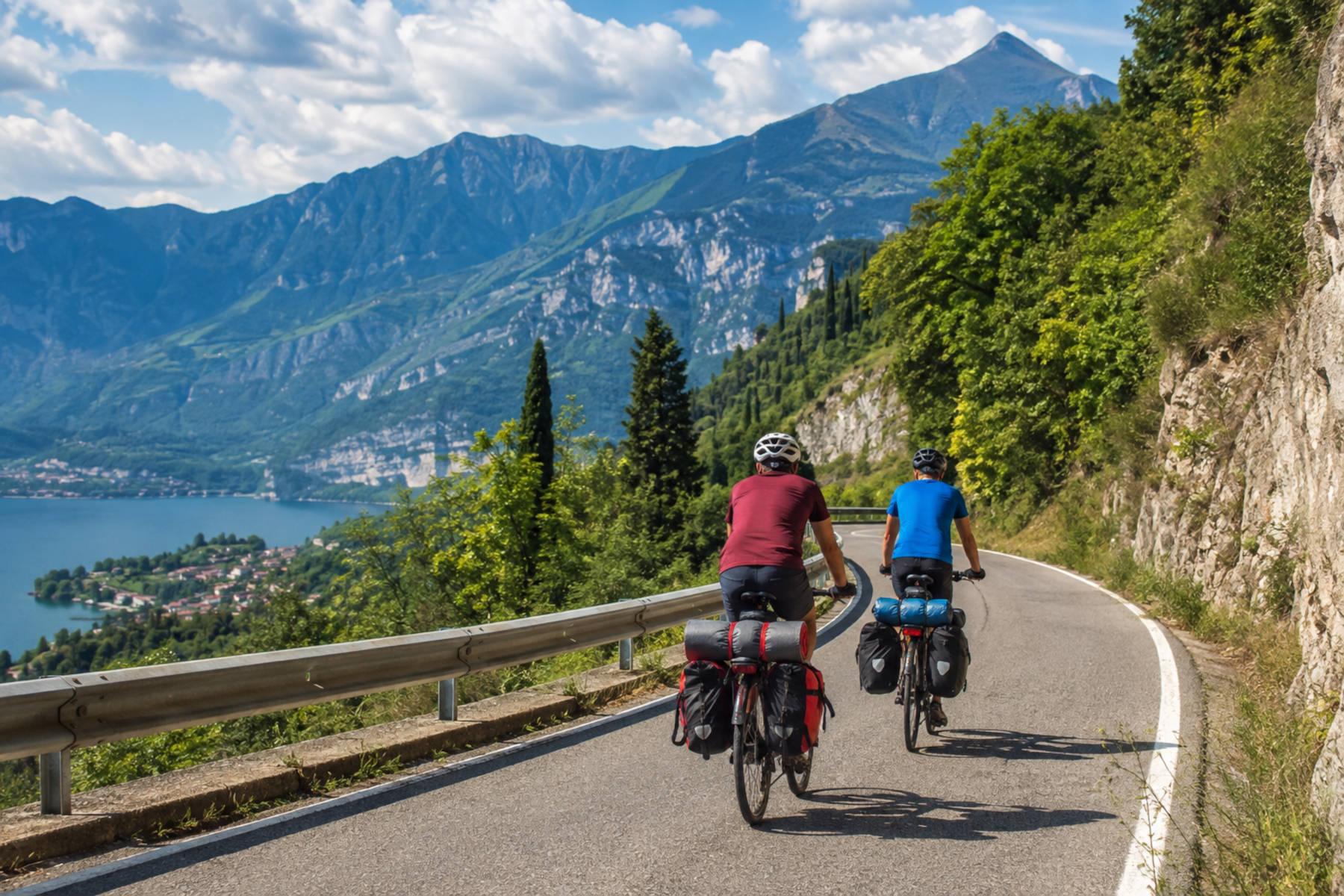
 There is something wonderfully simple about traveling by bicycle. You leave the traffic behind, feel the wind on your face, and watch the landscape change at a speed that gives you enough time to actually notice it. A village appears around the next bend. A small café becomes an unexpected lunch stop. A road that looked ordinary on the map turns out to run along a beautiful coastline or through a quiet valley.
That is the magic of bike touring. You are not simply visiting a place. You are moving through it.
But there is one important difference between taking your bicycle for an afternoon ride and traveling on it for several days. Everything you bring has to travel with you. Every extra jacket, unnecessary gadget, heavy cooking pot, and “just in case” item eventually becomes another kilogram that you have to pedal uphill.
This article is not for professional racers or people preparing for an extreme expedition. It is for travelers who want to spend several days exploring a country by bicycle, perhaps staying in campsites, small hotels, guesthouses, or a mixture of all three. You might be planning your first cycling trip, or simply wondering how experienced bike tourists manage to carry everything they need without turning their bicycle into a small cargo truck.
Over time, cyclists tend to discover the same basic truth: a successful bike tour is not about carrying everything you might possibly need. It is about understanding what you are likely to need, preparing for the problems that really matter, and learning to live comfortably with surprisingly little.
The best packing list, therefore, is not necessarily the longest one. It is the one that leaves you with enough equipment to feel prepared, while still leaving your bicycle light enough to be enjoyable.
1. Start With the Route, Not the Gear
It is tempting to begin planning a cycling trip by looking at bicycles, panniers, clothing, lights, tools, and all the other equipment that seems to be part of the adventure. But experienced cyclists usually begin somewhere much less exciting: with a map.
The route determines almost everything else.
A three-day ride between small towns is a completely different proposition from a week-long journey through remote mountain country. A coastal route with regular cafés and supermarkets allows you to travel light. A remote trail with long distances between settlements requires much more careful planning for food, water, and mechanical problems.
Distance can also be misleading. Fifty miles on a relatively flat road is one thing. Fifty miles with constant climbing, strong headwinds, poor road surfaces, and a fully loaded bicycle is something else entirely. When planning your first tour, it is usually better to underestimate what you can comfortably ride in a day rather than build an ambitious itinerary that leaves you exhausted every evening.
One of the best lessons from experienced bike tourists is surprisingly simple: your first trip does not need to be heroic. There is no prize for choosing the longest route or climbing the highest mountain. A shorter journey gives you the opportunity to discover how your body, bicycle, luggage, and daily routine work together without turning every small mistake into a serious problem.
Before leaving, I would also look beyond the route itself. Check where you can buy food and water, where the nearest bicycle shops are, and whether there are places to stay if the weather suddenly changes. Download an offline map as well. Mobile coverage can disappear at exactly the moment you decide that you really need your navigation app.
Good planning does not make a cycling adventure less spontaneous. Quite the opposite. When you know that the basic logistics are under control, you can afford to stop when you see something interesting, take a longer lunch, or spend an extra hour exploring a village without worrying about whether you will somehow survive the evening.
2. Your Bicycle Doesn’t Need to Be Perfect — But It Must Be Ready
You do not need the most expensive touring bicycle in the shop to travel by bike. A reliable bicycle that fits you properly is far more important than the logo printed on the frame.
What matters becomes obvious surprisingly quickly once the bicycle is loaded. Brakes that felt perfectly adequate on a short ride suddenly become much more important on a long descent. A saddle that seemed comfortable for an hour can become a serious problem after six hours. Gears that worked perfectly on your local streets may feel very different when you are climbing with several days’ worth of luggage attached to the bike.
That is why one of the smartest things you can do before a cycling trip is also one of the least glamorous: take a test ride with the bicycle fully loaded.
Don’t wait until the first morning of your tour to discover that your panniers move when you turn, your saddle is uncomfortable, or your handlebar bag blocks something you need to see. Ride for several hours with approximately the same equipment and weight you intend to carry on the real trip. The bicycle will tell you what needs to change.
This is also the moment when small mechanical problems have a chance to reveal themselves. Check the tires, brakes, chain, gears, wheels, lights, and all the attachment points for your luggage. If something feels wrong at home, it is unlikely to become better after two hundred kilometers.
There is a useful philosophy behind all of this: don’t try to make your bicycle perfect. Make it dependable.
A touring bicycle will get dirty. It will collect dust, rain, and road grime. The bags will probably become scratched, and your perfectly clean tires will soon look as if they have been somewhere interesting. None of that matters. What matters is that when you turn the pedals, the bicycle does exactly what you expect it to do.
3. The Art of Carrying Less
There is a moment on almost every first bike tour when the cyclist discovers the true meaning of the word “heavy.”
It usually happens on the first serious climb.
At home, an extra kilogram doesn’t seem particularly important. Put a jacket, another pair of shoes, a larger camera, a few extra food supplies, and several things you might need “just in case” into your panniers, and the bicycle still feels perfectly manageable in the driveway. Then the road starts climbing, and suddenly every one of those harmless little decisions has to be pushed uphill.
One first-time touring cyclist described exactly this experience after setting off with a bicycle loaded with far more food than was necessary. Cans, jars, fruit, vegetables and other supplies seemed like sensible preparation before departure. They certainly made the bicycle heavier. By the time some of that food had been eaten, the difference was surprisingly noticeable.
It is a lesson most cyclists eventually learn for themselves: every unnecessary item has to be carried not once, but for every kilometer of the journey.
This doesn’t mean that you should travel with nothing. It means that every item deserves a reason to be there. If you are passing through towns and villages regularly, there is little point in carrying several days of food. If you are staying in hotels, you don’t need a complete camping kitchen. If the weather forecast is stable and you have a reliable waterproof jacket, you probably don’t need three different outer layers.
The goal is not minimalism for its own sake. The goal is freedom.
A lighter bicycle is easier to control, easier to push when necessary, easier to carry up a flight of stairs, and simply more pleasant to ride. Most importantly, it leaves you with enough energy to enjoy the journey rather than spending the final kilometers thinking about how much you are carrying.
4. Pack Your Bicycle, Not Your House
Once you have decided what genuinely needs to come with you, the next challenge is finding a sensible place for everything. This is where panniers and other bike luggage become much more than simple bags. Good packing can make a loaded bicycle feel balanced and predictable. Poor packing can make it awkward before you have even reached the end of your street.
For traditional cycle touring, panniers remain one of the simplest and most practical solutions. They provide plenty of space, keep the weight low, and make it easy to organize equipment. Some riders also use a handlebar bag for things they need frequently during the day, such as a phone, snacks, sunglasses, or a camera.
Where you put the weight matters almost as much as how much you carry. Heavy objects should generally stay low and close to the center of the bicycle rather than sitting high above the rear wheel. The aim is to keep the bike stable and predictable when accelerating, cornering, climbing, and descending.
It is also worth thinking about what you may need while riding. There is nothing particularly enjoyable about stopping beside a busy road and unpacking half of your luggage because the rain jacket has somehow ended up underneath your sleeping bag. Frequently used items should have a permanent, easily accessible place.
Water deserves special attention too. Panniers and bags may look waterproof while still allowing moisture inside during prolonged rain. A simple waterproof liner or dry bag can protect clothing, electronics, and other items that you absolutely do not want to find wet at the end of a rainy afternoon.
Eventually, packing becomes almost automatic. Clothes go in one place, tools in another, food somewhere that can be reached without unpacking everything, and important documents and electronics stay protected. That organization may seem unnecessary before your first trip, but after several days on the road, it becomes one of those small things that makes life dramatically easier.
5. Dress for the Road, Not for the Closet
Choosing clothes for a bike tour is surprisingly difficult because you have to prepare for several different situations without bringing your entire wardrobe. You may start the morning feeling cold, become hot after an hour of climbing, get caught in rain after lunch, and then need another warm layer when the sun disappears in the evening.
The solution is much the same as it is for hiking: layers.
A lightweight base layer, a comfortable riding shirt, something warm for cooler conditions, and a windproof or waterproof outer layer can cover an impressive range of weather. The advantage is flexibility. Instead of trying to predict exactly what temperature you will experience six hours from now, you simply adjust your clothing as the conditions change.
There is another difference between cycling and ordinary travel that beginners sometimes discover the hard way. When you are moving, even a moderate headwind can make a warm day feel surprisingly cool. Stop for ten minutes, however, and the same clothing may suddenly feel too warm. The right system needs to work in both situations.
Comfort becomes increasingly important as the days pass. A shirt that feels fine for two hours may become irritating after six. Shoes that are acceptable around town may reveal every small problem once you have been pedaling all day. The same applies to cycling shorts, socks, gloves, and anything else that stays in contact with your body for hours.
And don’t forget something comfortable for the evening.
After spending most of the day in cycling clothes, there is a particular pleasure in arriving at a campsite or small hotel, taking off your riding gear, putting on a clean shirt, and realizing that you have nowhere else you need to be. That simple transition is one of the quiet pleasures of traveling by bicycle.
6. Food and Water: Don’t Run Out, Don’t Carry a Grocery Store
Food planning on a bike tour is a little different from planning food for an ordinary vacation. You are not simply deciding what you would like to eat. You are deciding what you are willing to carry on a bicycle for several hours.
That distinction becomes very clear on a long climb.
Food is fuel, and cycling can consume a surprising amount of it. A person who feels perfectly comfortable skipping lunch during a normal day in the city may discover a completely different relationship with food after several hours of pedaling. When your energy disappears on a remote road, the nearest café suddenly seems much farther away than it looked on the map.
That is why snacks should be easy to reach while riding. Fruit, sandwiches, energy bars, dried fruit, nuts, or whatever works best for you can make the difference between finishing a long stretch comfortably and feeling completely empty halfway through it.
At the same time, there is rarely a good reason to carry an entire supermarket on your bicycle. One of the advantages of cycle touring is that you move through places where people actually live. Small towns, village shops, bakeries, cafés, and supermarkets become natural parts of the journey. Instead of carrying several days of food, you can often buy what you need along the way.
Water requires a little more caution. A road that looks populated on a map may contain surprisingly few places to refill your bottles. On a hot day, discovering that the next shop is another twenty kilometers away is not an experience you want to repeat.
The right amount of water therefore depends heavily on your route, the weather, and the availability of reliable refill points. In remote areas, carrying extra water may be essential. On a route through villages and towns, you can travel much lighter.
There is also a simple psychological benefit to knowing where your next water stop will be. Instead of constantly wondering whether your bottles will last, you can concentrate on the road ahead and enjoy the landscape.
Good food and water planning is ultimately about balance. Carry enough to stay comfortable and safe, but don’t make your bicycle unnecessarily heavy. The road itself will provide many opportunities to eat, drink, and discover something you would never have found at home.
7. Learn to Fix the Small Things
There is a particular sound that every cyclist learns to recognize sooner or later: the sudden, unmistakable hiss of a punctured tire.
It rarely happens at a convenient location.
It doesn’t happen five minutes before reaching the hotel. It happens beside a quiet road, halfway between two towns, when the weather is changing and the next bicycle shop appears to be somewhere in another country.
You don’t need to become a professional bicycle mechanic before going on tour. But you should be able to deal with the small mechanical problems that are reasonably likely to occur. A puncture is the obvious example. Knowing how to remove the wheel, replace or repair a tube, inflate the tire properly, and check that everything is seated correctly can turn a potentially disastrous afternoon into a short roadside interruption.
A basic repair kit doesn’t need to be large. A spare inner tube, tire levers, a compact pump, patches, and a multitool can solve an impressive number of common problems. Depending on your bicycle and route, you may also want a spare chain link or a few other small replacement parts.
The important thing is not simply carrying the tools. Practice using them before you leave.
There is a world of difference between knowing that a tire lever exists somewhere inside your luggage and actually having changed a tube yourself. The first time you attempt a repair should not be the first time you have ever touched the equipment.
A little mechanical knowledge also changes the way you feel on the road. You don’t need to panic at every strange noise or minor problem. You know what you can handle yourself, what requires a bicycle shop, and when it is sensible to stop before a small problem becomes a large one.
That confidence is one of the hidden rewards of bike touring. After a few trips, the bicycle stops feeling like a complicated machine that might fail at any moment. It becomes something you understand well enough to look after.
8. Phones, Maps, Lights, and the Things That Keep You Moving
Modern technology has made independent cycling travel remarkably easy. A smartphone can contain your maps, accommodation details, weather forecast, translation tools, emergency contacts, and camera, all in a device that fits into your pocket.
But relying on technology completely is another matter.
Mountain roads, forests, remote valleys, and rural areas can all bring unreliable mobile coverage. A phone can also run out of battery at exactly the moment you need the map most. Downloading your route for offline use is therefore one of those tiny preparations that can prevent a surprisingly large problem.
A power bank is equally useful, particularly on multi-day trips. Charging cables should be kept somewhere you can find them without emptying half of your panniers. If you are staying in campsites, remember that electrical outlets may not always be conveniently located—or available at all.
Lights deserve attention even if you have no intention of cycling after dark. A good front and rear light improves your visibility in poor weather, tunnels, shaded roads, and unexpected late finishes. Reflective elements on clothing or luggage can help too.
And then there is the camera.
For many people, a bicycle tour becomes a photography trip almost by accident. You pass a landscape that would be completely ordinary from a car window, but after riding through it for an hour, it feels like something worth stopping for. The beauty of cycling is that stopping is easy. You simply lean the bicycle against a fence, take out your phone, and enjoy the view.
Technology should make that experience easier, not replace it. The best cycling days are usually the ones when the phone spends more time in your pocket than in your hand.
9. What You Almost Certainly Don’t Need
Packing for a bike tour has a strange psychological effect. The smaller the space available, the more important every possible item suddenly seems. A second pair of shoes feels essential. So does an extra jacket, a large towel, a full set of cooking equipment, three different chargers, a book you haven’t opened in years, and perhaps something else that “hardly takes up any space.”
The problem is that bicycles have an excellent memory. They remember every unnecessary kilogram.
After a few days on the road, the things you thought were essential at home often reveal themselves for what they really are: things you simply wanted to have with you. There is an important difference between the two.
This doesn’t mean that you should leave behind everything that isn’t strictly necessary. Comfort matters, and there is nothing wrong with carrying something simply because it makes the evenings more enjoyable. A small camera, a favorite book, or comfortable clothes for dinner can be worth their weight. The point is to make a conscious choice rather than filling every available space.
One of the best habits you can develop is reviewing your luggage after every trip. When you get home, unpack everything and ask yourself a simple question: did I actually use this?
Some answers will surprise you.
You may discover that the spare shirt was unnecessary, but the extra pair of socks was invaluable. The heavy cooking equipment may have stayed untouched while a tiny café became your favorite memory of the trip. A second pair of shoes may have seemed excessive until one afternoon of rain made you extremely grateful for them.
Experience doesn’t necessarily make your luggage smaller. It makes your decisions better.
Eventually, your packing list becomes personal. You know exactly what you need, what you enjoy having, and what can safely remain at home. The bicycle feels lighter, the bags are easier to organize, and preparing for the next journey becomes remarkably simple.
10. The Best Part of Bike Touring Isn’t the Distance
There is a temptation in cycling to measure everything. Kilometers covered. Average speed. Elevation gained. Hours in the saddle. It is natural to look at the numbers, especially when you are planning a route or trying to understand how far you can comfortably travel in a day.
But after a few days on the road, those numbers tend to become less important.
You remember the little bakery where you stopped because you were hungry and ended up talking to the owner. You remember a road through the countryside that seemed to go on forever. You remember swimming in a lake after a long, hot afternoon, or sitting outside a tiny café while your bicycle rested against the wall. You remember getting slightly lost and discovering a place you would never have found if you had followed the original route perfectly.
That is what makes traveling by bicycle so different from traveling by car.
You move slowly enough to notice the details, but quickly enough to cover meaningful distances. You can leave a city in the morning and find yourself surrounded by fields and forests a few hours later. You can stop whenever something catches your attention. There is no airport security, no timetable, and no need to rush through the landscape just to get to the next destination.
Good equipment certainly makes the experience better. A reliable bicycle, comfortable luggage, suitable clothing, enough food and water, basic repair tools, and a way to navigate safely all give you something very valuable: peace of mind.
But none of those things is the reason people remember their first great bike tour.
They remember the feeling of moving under their own power through somewhere new. They remember the freedom of having everything they need attached to the bicycle. They remember the unexpected places where they stopped, the people they met, and the landscapes that would have passed unnoticed from a car window.
So when you start preparing for your next cycling adventure, pack carefully—but don’t try to pack everything. Leave some space in your bags, some flexibility in your schedule, and plenty of room for the unexpected.
The best bike tours are rarely the ones where everything goes exactly according to plan. They are the ones where the road gives you something you never planned for, and you have enough time, energy, and curiosity to stop and enjoy it.
I agree with this. I would actually go one step further and do at least one long ride in the same shoes and clothes you plan to use on the tour. A small discomfort after two hours can become a nightmare after four or five days.
The food section made me smile because I have absolutely been that person carrying way too much food. 😂 On one trip I packed enough snacks for what felt like an expedition, only to discover bakeries and little grocery stores every few hours. These days I carry enough for the next part of the route and treat local food stops as part of the experience.
That’s a good distinction. I don’t think the article is really arguing for ultra-light touring either. The part about reviewing your luggage after each trip makes more sense to me. If something genuinely made a rainy evening or a mechanical problem easier, I’ll happily carry it again.
And honestly, leaving some room for an unexpected bakery stop might be the most important packing rule of all. 😄
“The bicycle will tell you what needs to change.”
This is so true. I’d also recommend actually practicing a puncture repair before leaving. Watching three YouTube videos doesn’t count. The first time I had to change a tube on the roadside, I discovered that knowing the theory and actually getting the tire off the rim were two very different things.
I’m slightly less convinced about the “carry less” philosophy, though. I understand the argument, but I think beginners sometimes take it too far. A spare layer, proper rain gear and a little extra food can be worth a few hundred grams when the weather turns bad.
For me the trick isn’t carrying as little as possible. It’s knowing what I’m carrying and why.
That’s a good distinction. I don’t think the article is really arguing for ultra-light touring either. The part about reviewing your luggage after each trip makes more sense to me. If something genuinely made a rainy evening or a mechanical problem easier, I’ll happily carry it again.
And honestly, leaving some room for an unexpected bakery stop might be the most important packing rule of all. 😄