

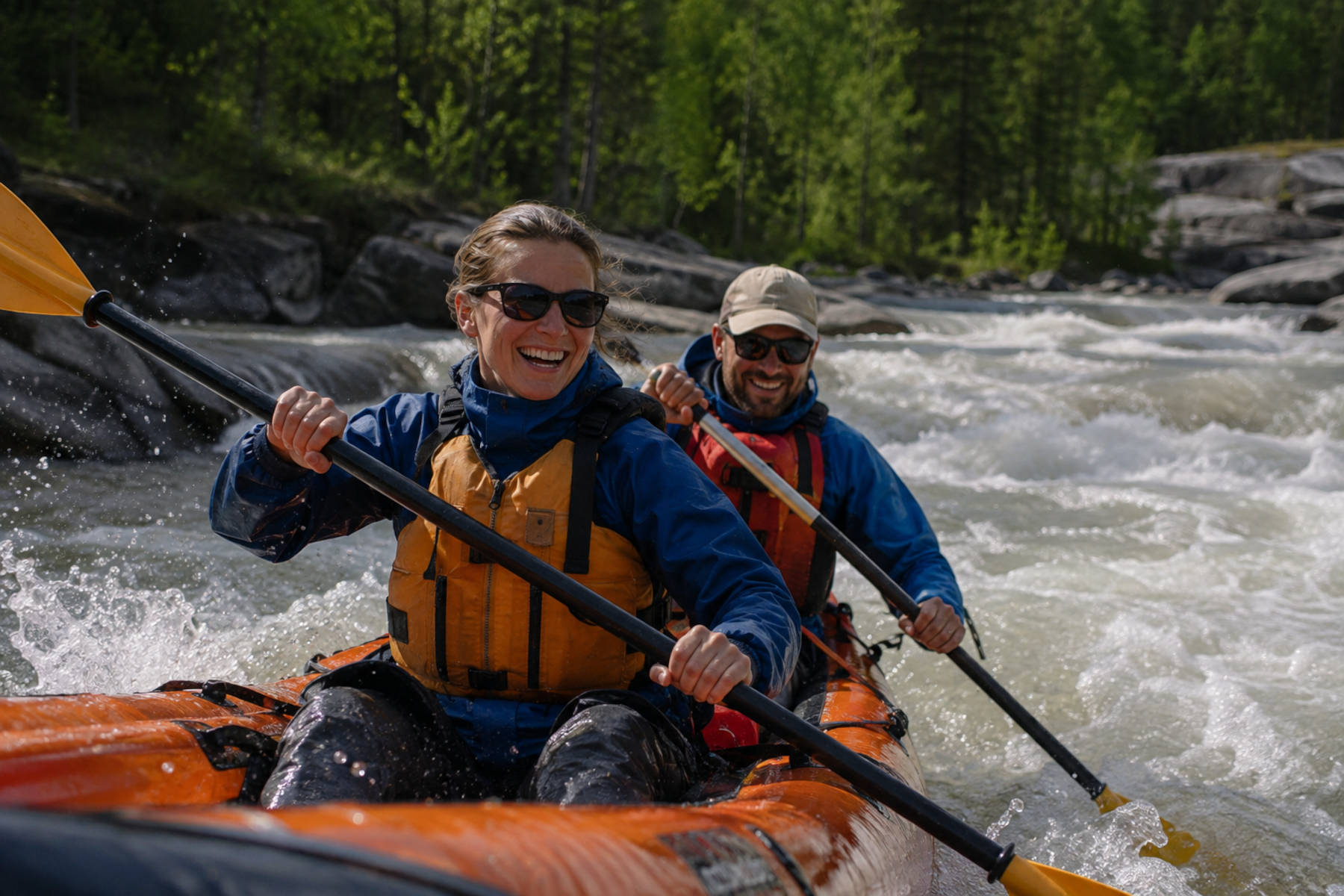
 A rafting trip has a way of making ordinary travel rules suddenly seem irrelevant. There is no point in bringing your favorite suitcase, your best shoes or half of the wardrobe you would normally pack for a weekend away, because sooner or later everything that is not properly protected is likely to meet the river. At the same time, the things you do need become surprisingly important once you are sitting in a raft several miles from the road, surrounded by water, rocks and forest. Good preparation is therefore less about taking more and more about understanding what the river is going to demand from you.
The word “rafting” covers a remarkably wide range of experiences. A gentle afternoon trip on a calm river is very different from several days of whitewater travel through rapids, and the equipment required for each can be completely different. Some trips are organized by professional outfitters who provide almost everything you need on the water, while others are self-supported journeys where participants carry camping equipment, food and personal gear with them. Before packing a single bag, it is worth understanding which kind of river adventure you are actually preparing for.
I have always liked the idea of river travel because it changes the relationship between the traveler and the landscape. On a road trip, you decide where to stop, while on a hiking trail you can usually choose your own pace. On a river, the current becomes part of the journey, and the landscape gradually unfolds around you rather than being something you simply pass through. That is one of the reasons a well-prepared rafting trip can feel less like an excursion and more like a temporary escape from ordinary life.
This guide is aimed primarily at recreational rafting and multi-day river adventures rather than extreme whitewater expeditions. If you are heading into technically difficult rapids, remote wilderness or a professionally guided expedition, follow the specific equipment and safety requirements of your guide or outfitter rather than relying on a general packing list. For everyone else, the principle is simple: bring things that tolerate water, protect you from the weather and make life on the river easier, while leaving behind anything that will become unnecessary weight.
1. Know Your River Before You Pack
The most useful thing you can take on a rafting trip is information. Before thinking about clothing or equipment, find out what kind of river you will be traveling on, how long the trip will last, where you will sleep and whether the organizers provide the major pieces of equipment. The season matters as well, because the same river can feel completely different in warm summer weather and during a colder period when water temperatures remain low. A packing list that works perfectly for a sunny day trip may be completely inadequate for a three-day journey with nights spent beside the river.
Pay particular attention to the conditions you are likely to encounter rather than relying only on the general reputation of the destination. Weather can change quickly near rivers, and rain upstream can affect water levels even when the sky above your campsite remains clear. Ask the operator what clothing and footwear they recommend, whether a wetsuit or other thermal protection is necessary, and what safety equipment will be supplied. A reputable rafting company should be able to answer these questions without hesitation, because they are part of preparing people for the actual conditions rather than simply selling them a seat in a boat.
The duration of the trip also changes everything. For a few hours on the water, you can keep your personal belongings to a minimum and return to your accommodation at the end of the day. Once the journey extends into overnight travel, however, the river becomes your temporary home, and sleeping equipment, food, dry clothing and personal hygiene suddenly become part of the equation. The good news is that multi-day rafting trips are often organized around shared equipment, so you should find out what the group is carrying before filling your own bag with things someone else has already packed.
There is also a safety reason for doing this research before you leave. Rivers are not swimming pools, and even a route that looks peaceful in photographs can contain strong currents, cold water, slippery rocks or sections where getting out of the boat is difficult. Your level of experience should match the difficulty of the trip, and the decisions of the guide should always take priority over your personal desire to continue. The river does not care how much you paid for the holiday or how excited you were when you booked it.
2. Dress for Getting Wet
The most important rule of rafting clothing is wonderfully simple: assume that you are going to get wet. Even on a calm river, paddles splash, water runs off the boat and people occasionally step into the river while launching or landing. On more active sections, getting soaked is not an accident but part of the experience. Clothing should therefore be chosen for how it behaves when wet rather than how it looks when you are standing beside the river at the beginning of the day.
Quick-drying synthetic fabrics are usually much more practical than heavy cotton, which can absorb a surprising amount of water and remain cold against the skin for hours. Lightweight layers give you more flexibility because conditions can change considerably between the morning launch and the afternoon. A warm layer protected inside a dry bag can become particularly valuable after a long period on cold water or when the wind picks up. The goal is not to dress like an astronaut, but to have enough control over your temperature that the weather does not dictate how much you enjoy the trip.
For sunny rivers, protection from the sun deserves just as much attention as protection from cold. Water reflects sunlight, and a long day on an exposed river can produce a surprisingly serious sunburn even when the air does not feel particularly hot. A lightweight long-sleeved shirt can be more comfortable than repeatedly applying sunscreen to every exposed part of your body, while a hat with a secure fit can make a noticeable difference during hours in the open. Sunglasses are useful too, but they should be secured properly because the river has an unfortunate talent for accepting small expensive objects as permanent donations.
Cold-water rafting requires a different approach. Depending on the river, season and trip, a wetsuit or other appropriate thermal protection may be necessary, particularly if there is a realistic chance of ending up in the water. This is one area where advice from the outfitter matters more than generic internet recommendations, because water temperature and river conditions are much more important than the temperature shown on your weather app. Being uncomfortable for an hour is one thing; becoming genuinely cold in moving water is an entirely different problem.
3. Your Feet Need Protection Too
Footwear is easy to underestimate on a rafting trip because most of the time you are sitting in a boat. In reality, you may spend a surprising amount of time standing in shallow water, walking over wet rocks, carrying equipment to the launch point or climbing out at the end of the day. Ordinary flip-flops are rarely a good solution because they can slip off easily and offer almost no protection from rocks. What you need is footwear that stays securely on your feet, provides reasonable grip and is comfortable when wet.
The right choice depends on the river and the type of trip. On a gentle recreational outing, water shoes or sturdy sandals designed for wet conditions may be perfectly adequate, while colder or more technical environments can call for neoprene boots or another form of protective footwear. Whatever you choose, it is worth wearing it before the trip rather than discovering on the first morning that the straps rub your feet or the sole becomes slippery on wet rocks. Rivers have very little sympathy for footwear problems, particularly when you are trying to carry a boat or a heavy dry bag.
It is also worth thinking about what happens after the day’s paddling is finished. A separate pair of dry, comfortable shoes can be a small luxury when you have spent hours with wet feet, especially on a multi-day trip. They do not need to be heavy or sophisticated; their main purpose is to give your feet a chance to recover while you are cooking dinner, walking around camp or simply sitting beside the river. That distinction between river footwear and camp footwear can make a surprisingly big difference to how comfortable the evening feels.
4. Keep the Things You Cannot Afford to Lose Dry
Waterproofing your important belongings is not an optional extra on a rafting trip. It is one of the first practical problems you should solve, because even the calmest river can produce enough splashing to turn an ordinary backpack into a collection of wet electronics and soggy documents. A proper dry bag gives you a much better chance of keeping essential items protected, provided it is correctly closed and appropriate for the conditions. For anything particularly important, experienced river travelers often prefer more than one layer of protection rather than trusting a single plastic bag to do everything.
Your phone, wallet, identification, medication and other essentials should have a secure place where they are protected from water and cannot easily fall overboard. If you are taking a camera, remember that a waterproof case is not necessarily the same thing as a case designed to survive prolonged immersion, so check the specifications rather than assuming that “water-resistant” means “river-proof.” Electronics can be particularly vulnerable because a small amount of water is enough to turn an expensive device into an expensive piece of decoration. The best approach is to keep anything you do not need during the journey sealed away and only expose it when necessary.
For a multi-day trip, dry storage becomes even more important because you are not simply protecting a phone for an afternoon. You need to keep at least one set of genuinely dry clothes available for later, along with sleeping gear and other items that would be miserable to use if they became soaked. Organizing these things before the trip is worth the effort, because rummaging through a large waterproof bag in the rain is not the moment when you want to discover that your spare clothes are mixed together with wet gear. A little discipline in packing can make a wet evening beside the river considerably easier.
There is also a psychological benefit to having a reliable dry place for your valuables. Once you know that your essential belongings are secure, you stop worrying about every splash and can concentrate on the river, the scenery and the people around you. That is exactly what good equipment should do: disappear into the background and allow you to enjoy the experience rather than constantly reminding you that you are carrying expensive things.
5. Water, Food and the Practicalities of Life on the River
Spending a day on a river can make you surprisingly thirsty, even though water is everywhere around you. Paddling is physical work, the sun can be intense, and wind moving across open water can hide how much you are sweating. Always follow the instructions of your guide or trip organizer about how much drinking water to bring and where additional supplies will come from. On a short organized trip, this may be handled entirely by the operator, while a self-supported expedition requires much more careful planning.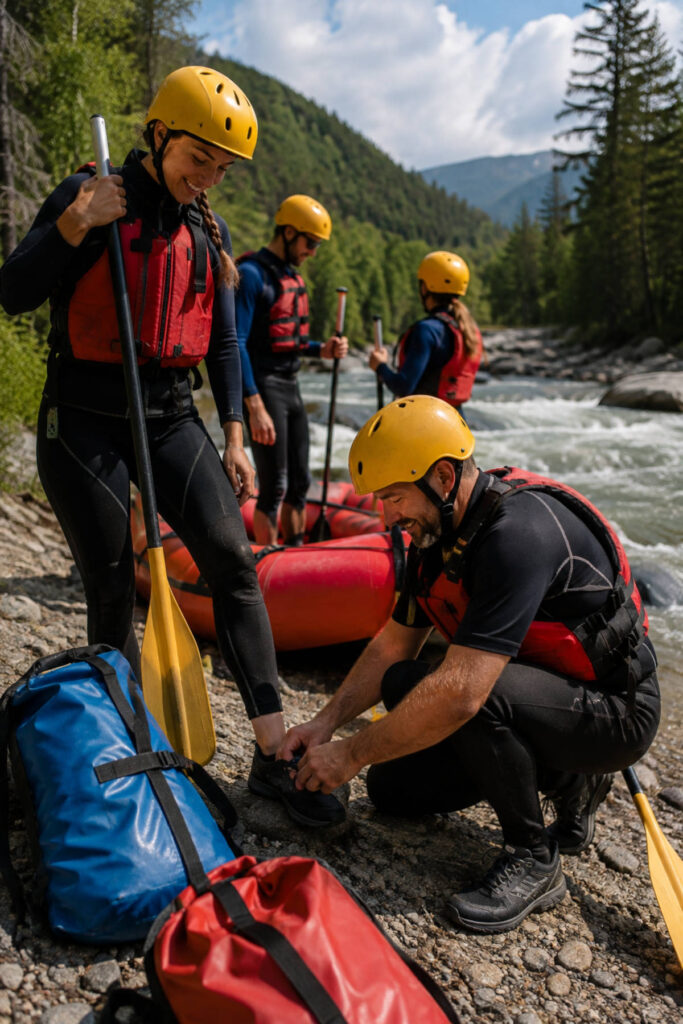
Food follows the same principle. A short rafting excursion may include lunch or snacks, whereas a multi-day journey means that food becomes part of the logistics of the entire trip. Lightweight foods that tolerate being transported in a dry bag are usually more practical than anything delicate or dependent on refrigeration. It is also worth considering when you will actually have an opportunity to eat, because a complicated meal is not particularly useful when the river is moving quickly and everyone is waiting to get back on the water.
On longer trips, cooking equipment and food storage are usually organized as a group rather than individually. Find out what the outfitter provides and what participants are expected to carry before you start buying equipment. There is little sense in bringing your own stove, fuel and cooking utensils if the expedition already has a complete kitchen setup, just as there is little sense in arriving with nothing if the trip is self-supported. The river rewards coordination, and shared equipment is often one of the simplest ways to keep the total load manageable.
Finally, remember that the most useful food on a river is often the simplest. A snack that can be eaten quickly, does not require cooking and remains edible after a little rough handling can be far more valuable than something elaborate. After several hours of paddling, nobody cares whether their food would have looked impressive on a restaurant plate. They care that it tastes good, provides energy and can be eaten without turning the inside of the raft into a kitchen.
6. Prepare for Sun, Wind and Sudden Changes in Weather
One of the peculiarities of spending a day on a river is that weather feels different when you are surrounded by water. There may be little shade, the wind can become noticeably stronger once the raft moves into an open stretch, and clouds can arrive without the kind of warning you would normally get in a town. Even on a beautiful summer morning, conditions can become uncomfortable surprisingly quickly. This is why experienced river travelers tend to prepare for more than the forecast promises rather than packing only for the weather they hope to have.
Sun protection deserves particular attention because a river can expose you to sunlight for hours at a time. Water reflects light, and there may be nowhere to escape the sun while the raft is moving through an open section. Sunscreen, sunglasses and a secure hat are therefore practical equipment rather than optional holiday accessories, while lightweight clothing that covers the arms and shoulders can make a long day considerably more comfortable. Reapplying sunscreen is especially important during a trip where you are repeatedly getting wet, because water and towels have a habit of removing whatever protection you applied in the morning.
Rain requires a different kind of preparation. A lightweight waterproof jacket can be useful even when the forecast looks favorable, particularly if you are going on a longer journey where conditions may change before you reach camp. The jacket does not have to be heavy expedition equipment for an ordinary recreational trip, but it should actually keep rain out and be easy to store when you do not need it. The important thing is to have one available before the weather turns, because stopping in the middle of a river to search through waterproof bags for a rain jacket is considerably less convenient than putting it on when the first clouds appear.
Temperature deserves equal attention. A hot afternoon can make people forget that rivers may remain surprisingly cold, particularly when they are fed by snowmelt or flow from higher elevations. If there is a realistic possibility of falling into the water, follow the outfitter’s recommendations about thermal protection rather than assuming that warm air means warm water. The river’s temperature matters far more than the temperature displayed by the weather app on your phone.
7. Safety Equipment Is Part of the Trip, Not an Optional Extra
There is a point where a rafting trip stops being simply a scenic journey and becomes an activity in which proper safety equipment is essential. The most obvious example is the personal flotation device, which should be worn correctly and remain properly secured whenever the operator requires it. On appropriate whitewater routes, a helmet may also be necessary, particularly where there is a realistic risk of falling into fast-moving water or coming into contact with rocks. These are not accessories intended to make a photograph look adventurous; they are basic pieces of equipment designed for situations that nobody plans to encounter.
If you are joining an organized trip, the outfitter will normally provide the equipment appropriate for the route and explain how it should be used. Listen carefully even if you have been rafting before, because different rivers, boats and conditions can require different procedures. A short safety briefing may seem routine when everyone is eager to get on the water, but the few minutes spent paying attention can become extremely valuable if the situation changes later. The river does not care whether you have done ten rafting trips before or this is your first one.
Your own responsibility begins with choosing a trip that matches your abilities. People sometimes underestimate rivers because photographs make them look peaceful, while the difficulty rating of a route can tell a very different story. If you are inexperienced, a professionally guided trip is generally a far better introduction than trying to imitate an expedition you have seen online. There is no prize for choosing the most difficult river available, and knowing that a particular route is beyond your current experience is a sign of good judgment rather than a lack of adventure.
The same principle applies to personal health and fatigue. Paddling for several hours is physical exercise, and the combination of cold water, heat, sun and exertion can affect people more quickly than they expect. If you are feeling unwell, exhausted or unable to keep up with the demands of the trip, tell the guide rather than trying to hide the problem. A successful rafting adventure is not measured by how much discomfort you managed to tolerate; it is measured by everyone getting back to shore safely and still having good memories of the river.
8. When the River Becomes Your Campsite
Multi-day rafting changes the packing equation completely. Once you are spending nights beside the river, you are no longer simply taking a few things for a day outdoors; you are carrying a temporary home through a landscape where roads and shops may be far away. The good news is that most organized expeditions distribute the heavier equipment among the group, which means you should not assume that every participant needs to bring a complete camping setup. Before the trip, find out exactly what the outfitter provides and what you are expected to carry personally.
For your own sleeping arrangements, the basic priorities are the same as on any other outdoor trip: somewhere dry to sleep, enough insulation from the ground and a sleeping bag suitable for the expected nighttime temperatures. On a river journey, however, keeping those things dry becomes particularly important because wet camping equipment can turn an ordinary cold evening into a genuinely miserable one. Sleeping bags and clothing should be packed in reliable waterproof storage, and it is worth treating the protection of your sleeping gear as a priority rather than assuming that the raft itself will keep everything safe.
Camp clothing should be separated from the clothes you wear on the river whenever possible. After a day of paddling, putting on something completely dry can change your entire perception of the evening, especially if the temperature falls after sunset. A warm layer, dry socks and comfortable footwear may seem like very ordinary possessions, but beside a river they can feel considerably more valuable than anything expensive in your luggage. The best camp gear is rarely glamorous; it simply works when you need it.
There is also a psychological side to carrying the right amount of equipment. On a multi-day river trip, every unnecessary object has to be packed, protected from water, carried, unpacked and packed again, often several times. The lighter and simpler your personal gear is, the less time you spend managing it and the more attention you can give to the river and the landscape. A good rafting trip has a wonderful rhythm of paddling, drifting, landing, setting up camp and starting again the next morning, and excessive luggage can interfere with that rhythm surprisingly quickly.
“`html id=”m8w3pz”
9. What Is Better Left at Home
One of the easiest mistakes on a rafting trip is to confuse preparation with accumulation. Once people start thinking about everything that might possibly be useful, the bags become heavier, the waterproof storage becomes more complicated and the amount of time spent looking for things increases. A river trip is one of those situations where simplicity usually works better than abundance. If an item is fragile, difficult to protect from water, rarely used or easily replaced, it deserves a second thought before it goes into your bag.
Heavy luggage is particularly inconvenient because everything eventually has to be moved by hand. You may have to carry it from the vehicle to the river, from the river to the campsite and back again, often over uneven ground or slippery rocks. The fact that something fits inside a bag does not mean that it belongs on a river journey. A small amount of well-chosen equipment is usually far more useful than a collection of things brought along simply because there was room for them.
Electronic devices are another category worth considering carefully. A phone can be extremely useful for communication, navigation, photography or emergencies, but bringing several expensive gadgets onto a wet river is rarely necessary unless the trip specifically calls for them. The same applies to cameras and other equipment that you would spend the entire day worrying about protecting. Sometimes the best photograph is the one you take with a device you are comfortable getting wet, while everything else remains safely sealed away.
There is also something liberating about leaving ordinary habits behind for a few days. You probably do not need several changes of fashionable clothes, a large collection of toiletries or anything that requires constant charging. The river has a way of making such things seem less important after the first few hours. Once you realize that your day is going to revolve around paddling, scenery, meals, camp and conversation, a surprisingly large part of the usual travel baggage starts to look unnecessary.
10. Take Less, Experience More
The best rafting trips are rarely remembered because somebody packed the perfect bag. Years later, people tend to remember the bend in the river where the valley suddenly opened in front of them, the sound of water moving through a rapid, an evening beside the campsite or the strange quiet that settles over a river early in the morning. Equipment matters because it allows you to experience those moments comfortably and safely, but it should never become the main subject of the journey. The river itself is the reason you came.
That is why preparing for a rafting trip is ultimately an exercise in choosing rather than collecting. You need clothing that can handle water and changing weather, footwear that will keep you steady on wet ground, reliable protection for the things that must stay dry and enough food and water for the journey. You need to understand what safety equipment is provided, listen to the people responsible for the route and make sure the difficulty of the trip matches your experience. Beyond that, much of what looks essential in a conventional holiday can stay comfortably at home.
There is something wonderfully simple about allowing a river to determine the rhythm of your days. You wake with the light, pack your things, carry them down to the water and begin moving again, with the landscape changing gradually around you rather than flashing past a car window. By the evening, the equipment that seemed so important when you were packing becomes almost invisible, while the river, the weather, the people and the landscape become the things you actually notice. That is probably the best sign that you packed correctly.
So before your next rafting adventure, check the river, listen to the guides and think carefully about what you will genuinely use. Protect the few things that cannot get wet, dress for the conditions rather than the photographs, and leave enough space in your luggage for the unexpected. The lighter and simpler your gear becomes, the easier it is to forget about it and concentrate on the journey itself. And once you are sitting in a raft with the current carrying you downstream, that is exactly where your attention belongs.
The “assume you’re going to get wet” rule is probably the best advice here. I went rafting in Slovenia a few years ago thinking the weather was warm enough that it wouldn’t matter. Big mistake. By the end of the day I was wet, cold and very happy that I’d brought a completely dry layer for the evening.
Good point about footwear too. People always seem to focus on the jacket and dry bags, but walking over slippery rocks in cheap sandals is not much fun. I prefer proper water shoes with a decent sole. They have saved my feet more than once.
The dry bag section is absolutely essential. I once watched someone put their phone in a “waterproof” backpack on a rafting trip and then discover that waterproof apparently meant “fine if it rains a little.” 😂
These days anything important gets its own dry bag, and for electronics I use an additional waterproof case.
I think the article makes an important distinction between an organized trip and a self-supported one. On a guided multi-day trip, people sometimes turn up carrying far too much because they don’t bother asking what the outfitter already provides.
If the group has shared cooking equipment and camping gear, there’s no reason for five people to bring five stoves.
One thing I’d add is not to underestimate the sun on the river. I’ve had some surprisingly bad sunburns while rafting because it didn’t feel particularly hot with the wind and water around us.
Long sleeves, sunglasses and a hat that actually stays on your head are worth bringing.
“Preparation with accumulation” is a great way of putting it.
I’ve become much more minimalist with outdoor trips over the years. If something needs to be kept dry, carried everywhere and unpacked every evening, I ask myself whether I really need it.
The funny thing is that once you’re actually on the river, you barely notice the things you left at home. You notice the landscape instead.